Yakushima, Kagoshima Prefecture World Heritage Site: Comprehensive Explanation of a Natural Treasure Celebrating 30 Years of Registration
Yakushima, which belongs to Kagoshima Prefecture, is an island with a rare natural environment that was registered as Japan’s first World Natural Heritage site on December 11, 1993 (Heisei 5), along with Shirakami-Sanchi. It is highly valued for its primordial forests of Yakusugi cedars with ages exceeding several thousand years, the vertical distribution of vegetation continuously visible from the coastline to the mountain peaks, and its unique ecosystem. Approximately 21% of the island, totaling 10,747 hectares, is protected as a World Heritage area.
This article comprehensively introduces the charm of Yakushima, covering the reasons for its World Heritage registration, its unique natural environment, tourist attractions, access methods, and precautions for visitors.
Basic Information and Geographic Characteristics of Yakushima
Location and Overview
Yakushima is a remote island floating in the East China Sea, approximately 130 km south of Kagoshima City and about 60 km south-southwest of Cape Sata on the Osumi Peninsula. Together with Tanegashima and Kuchinoerabu Island, it forms the Osumi Islands, with an area of approximately 500 square kilometers and a circumference of about 130 km in an almost circular shape. It ranks as the 7th largest island in Japan.
Administratively, it belongs to Yakushima Town, Kumage District, Kagoshima Prefecture, with settlements such as Miyanoura, Anbo, and Onomama scattered throughout the island.
Mountainous Terrain Called “The Alps on the Ocean”
The greatest characteristic of Yakushima lies in its steep terrain. Approximately 90% of the entire island is occupied by mountainous areas, with a series of peaks exceeding 1,000 meters, including Minamiura Peak (1,936 m), the highest point in Kyushu, as well as Nagata Peak (1,886 m) and Kurio Peak (1,867 m).
Due to this rugged terrain, it is also called “The Alps on the Ocean.” The steep gradient that reaches nearly 2,000 meters in elevation over a distance of just about 15 km from the coastline is a rare geological formation even by global standards. This very terrain is the source that creates Yakushima’s abundant natural environment.
Reasons for Yakushima’s World Natural Heritage Registration
Circumstances of World Heritage Registration
Yakushima was registered as a natural heritage on the World Heritage List at the World Heritage Committee held in Cartagena, Colombia from December 6-11, 1993, together with Shirakami-Sanchi. In the same year, the Buddhist architectural structures of Horyuji Temple and Himeji Castle were registered as cultural heritage, marking a memorable year for Japan.
The official registration date is December 11, 1993 (Heisei 5). In December 2023, it marked 30 years since the World Natural Heritage registration.
Registration Criteria and Evaluated Points
The primary reasons for Yakushima’s World Natural Heritage registration are as follows:
1. Primordial Natural Forests with Ages Exceeding Several Thousand Years
The Yakusugi, a group of giant cedar trees aged 1,000 years or more, boasts an unparalleled scale and age worldwide. Notably, Jomon Cedar has an estimated age of 2,000 to 7,200 years and attracts worldwide attention as one of the oldest plants.
While the southwestern Nansei Islands comprise over 900 islands, only Yakushima possesses such a primordial natural forest.
2. Vertical Distribution of Vegetation Extending from Coastline to Mountain Peaks
Yakushima displays continuous vegetation ranging from subtropical to cool temperate zones according to elevation differences. From subtropical plants on the coast to broad-leaved evergreen forests around 500 m elevation, coniferous forests around 1,000 m, and alpine plants at the summit, one can observe a vertical distribution that seems to condense the vegetation of the entire Japanese archipelago.
This vegetation continuity creates an extremely diverse ecosystem within a limited area and is considered to have very high academic value.
3. Unique Ecosystem and Endemic Species
The isolated island environment of Yakushima and its diverse vegetation belts have nurtured organisms that have undergone independent evolution. These include endemic subspecies such as Yakushima macaque and Yakushima sika deer, as well as many endemic plants.
Additionally, abundant precipitation (annual rainfall exceeding 4,000 mm on plains, reaching 10,000 mm in mountain areas) creates a humid environment that serves as a treasure trove of mosses and ferns. The unique climate, where it is said to rain “35 days a month,” supports this distinctive ecosystem.
4. Superior Natural Scenery
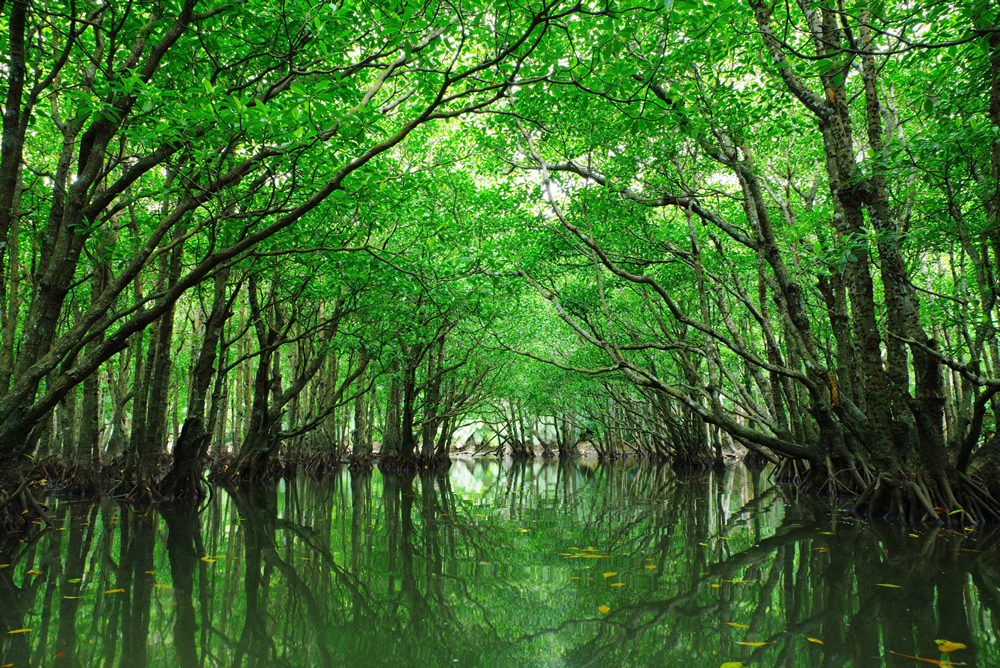
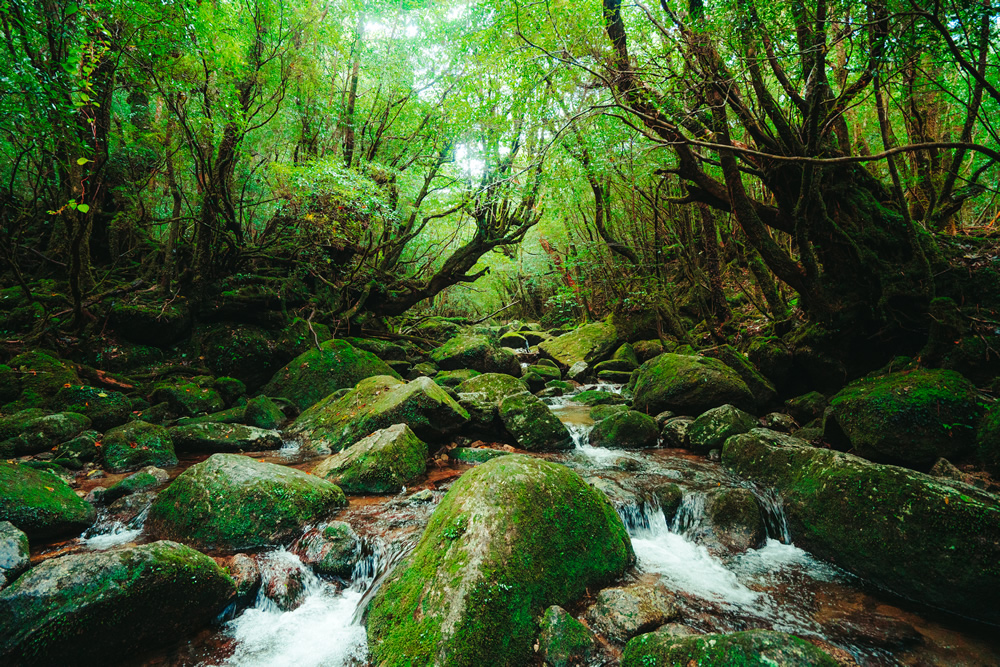
Yakushima boasts excellent natural beauty, including primordial forests covering mountainous areas, clear streams flowing through valleys, and coastlines dotted with massive boulders. This diversity and primitiveness of the landscape were highly evaluated.
World Heritage Area and Yakushima National Park
Range of the World Heritage Registration Area
The World Heritage area of Yakushima does not encompass the entire island but rather approximately 21% of it (10,747 hectares). It primarily covers the mountainous areas from the central to western portions of the island, including the primordial forest area centered on Minamiura Peak.
The World Heritage area is strictly protected, and entering the mountains requires adherence to certain rules and etiquette.
Relationship with Yakushima National Park
Yakushima was designated as Yakushima National Park on March 16, 2012 (Heisei 24), separating from Kirishima-Yaku National Park. The national park covers a larger area than the World Heritage site and includes most of the island.
The World Heritage area forms the core of the national park and is subject to more rigorous protection and management. At the Yakushima World Heritage Center, one can learn about the value of the World Heritage site and the importance of nature conservation.
Major Natural Attractions and Points of Interest on Yakushima
Jomon Cedar
The signature giant tree of Yakushima with an estimated age of 2,000 years or more (estimates vary, with some suggesting up to 7,200 years), it is the king of Yakusugi cedars. With a circumference of 16.4 m and a height of 25.3 m, its overwhelming presence astonishes visitors.
Access to Jomon Cedar requires a full-scale climbing expedition of approximately 22 km round trip and about 10 hours. After walking about 8 km on a trolley track, one climbs a mountain path to reach it.
Shiratani Unsuikyo Gorge
A natural recreation forest spanning elevations of 600 m to 1,050 m, where moss-covered primordial forests create a fantastical landscape. It is said to have been the model for the setting of the film “Princess Mononoke,” and the “moss-covered forest” in particular is a popular spot.
The course from the entrance to Taiko Rock takes approximately 4 hours round trip, allowing for a more casual trekking experience than the Jomon Cedar trek.
Yakusugi Land
A natural recreation forest located at elevations of 1,000 m to 1,300 m with multiple courses ranging from 30 minutes to 150 minutes. There are abundant attractions including the massive tree stump “Buddha Cedar” and the “Mother and Child Cedar” with an age of 1,800 years.
Its appeal lies in well-maintained courses that can be enjoyed by beginners and families.
Minamiura Peak
Standing at 1,936 m, it is the highest peak in Kyushu and is popular with serious mountaineers. From the summit, one can overlook all of Yakushima, and on clear days, Tanegashima Island and Kaimon Peak can be seen.
The course from Yodogawa Trailhead is the standard route, requiring approximately 8 to 10 hours round trip.
Senhin Falls
A spectacular waterfall with a drop of 60 m that flows down a massive single slab of granite. Viewing the entire waterfall from the observation platform is breathtaking, and it is popular as a spot where visitors can experience Yakushima’s nature without mountaineering.
Nagata Inaka Beach
Known as a sea turtle nesting site, this beautiful sandy beach is where Japanese sea turtles come to nest from May to August. By participating in an appropriate guided tour, one can observe the nesting process.
The coastal nature is an important element of Yakushima, and this location allows visitors to feel the continuity of nature from the sea to the mountains.
Western Forest Road
A road running through the western part of the island for approximately 20 km, it is the only vehicular road passing through the World Heritage area. The encounter rate with Yakushima macaques and Yakushima sika deer is extremely high, allowing observation of wildlife from the vehicle.
The road, surrounded by primordial forests, serves as a driving course where one can appreciate the richness of Yakushima’s nature.
Access Methods to Yakushima
Access by Airplane
The following routes operate to Yakushima Airport:
- From Kagoshima Airport: Japan Air Commuter (JAC) operates 3 to 5 flights daily. Flight time approximately 35 minutes.
- From Fukuoka Airport: Japan Air Commuter (JAC) operates 1 flight daily (seasonal service). Flight time approximately 1 hour 10 minutes.
- From Osaka (Itami) Airport: Japan Air Commuter (JAC) operates 1 flight daily (seasonal service). Flight time approximately 1 hour 30 minutes.
From the airport, access to main settlements is by bus or rental car.
Access by High-Speed Ferry
High-speed ferries “Toppy” and “Rocket” operate from Kagoshima Honko South Wharf to Miyanoura Port or Anbo Port on Yakushima.
- Travel time: Approximately 2 hours to 2 hours 30 minutes
- Number of departures: 4 to 7 daily (varies by season)
- Some services include a stop at Tanegashima Island
Service may be suspended due to sea conditions, so attention to weather is necessary.
Access by Ferry
Ferries such as “Yakushima 2” and “Ferry Taiyo” operate from Kagoshima Honko South Wharf to Miyanoura Port or Anbo Port on Yakushima.
- Travel time: Approximately 4 hours
- Number of departures: 1 to 2 daily
- Vehicle transport is available
While the journey takes longer, it offers cheaper fares and the advantage of bringing a vehicle.
Transportation on the Island
The following transportation options are available for getting around Yakushima:
- Rental car: Offers the greatest freedom and efficient sightseeing. Advance reservations are recommended.
- Shuttle buses: Connect main settlements and tourist attractions, though the number of services is limited.
- Bicycle rental: Suitable for sightseeing around settlements.
- Taxi: Sightseeing taxis are also available.
Precautions and Etiquette for Hiking and Trekking
Important Notes for Jomon Cedar Hiking
Jomon Cedar hiking is a full-scale climbing expedition covering approximately 22 km round trip with an elevation gain of about 700 m. Please note the following:
Necessary Preparation
- Hiking boots, rain gear (separate top and bottom), warm clothing, headlamp, and plenty of water and food
- Departure early in the morning, around 4 to 5 a.m., is necessary (for day trips)
- Plan with adequate physical fitness and time
Mountain Entry Registration
- Submission of a mountain entry registration is recommended on Yakushima
- Can be submitted online or at the trailhead
Carrying Portable Toilets
- Mountain facility restrooms are limited
- Carrying portable toilets is strongly recommended
Nature Conservation and Etiquette
To protect the natural environment of Yakushima as a World Natural Heritage site, please follow the following etiquette:
- Always take trash with you: The principle is “take everything you bring in out with you”
- Stay on marked trails: Do not walk off designated routes to protect vegetation
- Do not feed wildlife: This prevents impacts to the ecosystem
- Do not collect plants: Plant collection within the national park is prohibited by law
- No campfires: Fire use outside designated areas is strictly prohibited
- Avoid loud voices: Show consideration for wildlife and other hikers
Mountain Entry Cooperation Fee
A voluntary mountain entry cooperation fee is being requested for the preservation of Yakushima’s natural environment. The collected cooperation fees are used for maintaining hiking trails and natural conservation activities.
Best Season for Yakushima Tourism
Seasonal Characteristics
Spring (March to May)
- New greenery is beautiful, and flowers such as Yakushima rhododendron bloom
- Weather is relatively stable, making it suitable for hiking
- Golden Week is crowded, so early reservations are recommended
Summer (June to August)
- The rainy season (June) brings heavy rainfall, but vegetation is at its most lush
- July to August is sea turtle nesting season
- Heat measures and hydration are important
Autumn (September to November)
- Typhoon season (September to October) requires attention to weather
- November has relatively stable weather and offers autumn foliage enjoyment
- One of the best seasons for hiking
Winter (December to February)
- Mountain peaks may have snow, requiring winter mountaineering equipment
- Fewer tourists allow enjoyment of a quieter Yakushima
- Coastal areas are relatively warm
Weather and Precipitation
Yakushima is said to be an island where it “rains 35 days a month,” with very high precipitation. Annual rainfall exceeds 4,000 mm on plains and reaches 10,000 mm in mountain areas.
Weather is changeable, and rain can suddenly fall even when it appears sunny. Always carry rain gear when hiking and check weather forecasts.
Utilization of Yakushima World Heritage Center
The Yakushima World Heritage Center, operated by the Ministry of the Environment, is a facility where visitors can learn about Yakushima’s nature and its value as a World Heritage site.
Facility Overview
- Location: Anbo, Yakushima Town, Kumage District, Kagoshima Prefecture
- Opening hours: 9:00 to 17:00 (hours vary by season)
- Admission fee: Free
- Exhibits: Yakushima’s nature, circumstances of World Heritage registration, ecosystems, conservation activities, etc.
Benefits of Visiting
By visiting before hiking, one can deepen understanding of Yakushima’s natural environment and precautions. The latest information on hiking trails and weather conditions can also be obtained, which is helpful for safe hiking planning.
Culture and History of Yakushima
Yakusugi and Its Relationship with People
Since the Edo period, Yakusugi cedar has been felled on Yakushima and used as building materials and craft items. Particularly during the Satsuma Domain period, Yakusugi cedar was paid as annual tribute.
Currently, felling within the World Heritage area is prohibited, and the history of Yakusugi can be learned from previously felled stumps and fallen trees.
Island Industries
The main industries on Yakushima include tourism, agriculture (citrus fruits such as tankan and ponkan), and fishing. Additionally, Yakusugi craftsmanship continues as a traditional industry.
Toward Sustainable Tourism
Addressing Overtourism
Following World Heritage registration, tourist numbers to Yakushima have increased, with congestion on the Jomon Cedar hiking trail and environmental impacts becoming issues.
Kagoshima Prefecture and Yakushima Town are implementing measures toward sustainable tourism, including limitations on the number of hikers, distribution of entry times, and maintenance of hiking trails.
What Visitors Can Do
- Avoid peak periods: Avoiding busy seasons such as Golden Week and Obon allows for a more comfortable experience
- Stay longer: Staying for several days rather than just one day allows for deeper appreciation of the island’s entire appeal
- Use guided tours: Learning about nature and culture from local guides and enjoying experiences safely
- Contribute to the local economy: Supporting local accommodations, restaurants, and souvenir shops contributes to the regional economy
Conclusion: The Value and Future of Yakushima
Yakushima in Kagoshima Prefecture possesses a globally rare natural environment, including Yakusugi cedars aged thousands of years, continuous vertical distribution of vegetation from coastline to mountain peaks, and a unique ecosystem. It was registered as Japan’s first World Natural Heritage site in December 1993 (Heisei 5).
In 2023, the 30th anniversary of World Natural Heritage registration was celebrated, and the achievements of conservation efforts thus far and future challenges are being recognized anew. The primordial natural forests and superior natural scenery have value as humanity’s shared heritage that should be passed on to future generations.
When each individual visitor maintains consciousness of nature conservation and follows appropriate etiquette, the rich natural environment of Yakushima will be preserved for the future. When visiting the World Heritage island of Yakushima, it is important to understand its value and interact with nature respectfully.
Through hiking and trekking, one can touch the mysteries of primordial forests; observe sea turtle nesting; and enjoy encounters with wildlife—Yakushima offers experiences that may be described as a return to the origins of Japan’s nature. Experience an irreplaceable encounter with nature at Yakushima, Kagoshima Prefecture’s world natural heritage.