Nikko’s Sacred Sites: Complete Guide | Thorough Explanation of Tochigi Prefecture’s World Heritage
“Nikko’s Sacred Sites” located in Nikko City, Tochigi Prefecture, has attracted attention from both domestic and international audiences as a representative world cultural heritage of Japan. Registered on December 2, 1999, at the 23rd UNESCO World Heritage Committee held in Marrakech, Morocco, as Japan’s 10th world heritage site, this precious legacy is not merely an assemblage of historical structures. It has been recognized for its universal value through the approximately 1,200-year history of Nikko Mountain, its unique religious culture where Shintoism and Buddhism are fused, and its cultural landscape integrated with the natural environment.
This article provides a detailed explanation of the entirety of the world heritage “Nikko’s Sacred Sites,” from its historical background to its constituent assets, highlights, and access information.
What is the World Heritage “Nikko’s Sacred Sites”
“Nikko’s Sacred Sites” is a world cultural heritage centered on two shrines and one temple (Nikko Toshogu Shrine, Nikko Rinnoji Temple, and Nikko Futarasan Shrine) located within Nikko Mountain in Nikko City, Tochigi Prefecture. This world heritage includes a total of 103 structures including 9 National Treasures and 94 Important Cultural Properties, as well as the archaeological sites surrounding them (cultural landscape), with a registered area of approximately 50.8 hectares.
Value as a UNESCO World Cultural Heritage
“Nikko’s Sacred Sites” was registered as a UNESCO World Heritage for meeting the following evaluation criteria:
Evaluation Criterion (i): Masterpiece of Human Creative Genius
The sculptures, paintings, and architectural techniques by representative Japanese artists and craftsmen from the early Edo period, such as the Yomeimon Gate of Nikko Toshogu and the sleeping cat, demonstrate the pinnacle of human creative talent.
Evaluation Criterion (iv): Architecturally Important Style in Human History
The unique architectural style where Shintoism and Buddhism are fused, and the Toshogu Main Hall, the completed form of Gongen-zukuri architecture, demonstrates an important stage in the development of Japanese religious architecture.
Evaluation Criterion (vi): Associated with Events or Traditions of Universal Significance
As the mausoleum of Tokugawa Ieyasu, an important figure in Japanese history, and a symbol of 260 years of peace during the Edo shogunate, it is deeply connected with Japan’s history and culture.
History of Nikko’s Sacred Sites
Approximately 1,200 Years from the Opening of Nikko Mountain to the Present
The history of Nikko begins with the opening of Nikko Mountain in 782 (the first year of Enryaku) by the Buddhist monk Shodo Shonin. Shodo Shonin succeeded in climbing Nantai Mountain (elevation 2,486 meters) and established this area as a sacred site for mountain Buddhism.
From the Heian period through the Kamakura period, Nikko Mountain developed as a sacred place for Shugendo (mountain asceticism), attracting many monks and practitioners. During this period, Nikko Futarasan Shrine (initially called Futarasan Daijingu) flourished as the center of mountain worship.
Tokugawa Ieyasu and the Founding of Nikko Toshogu
The turning point that brought Nikko to its current form came in 1617 (the third year of Genna), the early Edo period. Tokugawa Ieyasu, who opened the Edo shogunate, passed away, and the following year, his remains were transferred from Kunozan to Nikko according to his will. The Toshosha (later Toshogu) was founded by the second shogun, Tokugawa Hidetada, and Ieyasu was deified as “Tosho Daigongen.”
From 1634 to 1636, the third shogun Tokugawa Iemitsu implemented large-scale renovation work called the “Kan’ei Great Reconstruction.” Through this work, the splendid shrine buildings seen today were completed, and Nikko Toshogu became a symbolic structure representing the authority of the Tokugawa family. The total construction cost is said to have been approximately 568,000 ryo at the time (equivalent to over 4 billion yen in current value).
Separation of Shintoism and Buddhism after the Meiji Restoration and Modern Era
The Meiji Restoration’s Shinbutsu Bunri (separation of Shinto and Buddhism) Edict forced major reforms on Nikko Mountain, which had previously taken a form of religious syncretism. Toshogu Shrine and Futarasan Shrine were separated as Shinto shrines, and Rinnoji became a Buddhist temple, establishing the current form of two shrines and one temple.
During the Showa period, many structures were designated as National Treasures or Important Cultural Properties, and preservation activities became more serious. Then, on December 2, 1999 (Heisei 11), with its registration as a UNESCO World Heritage, Nikko’s Sacred Sites established its position as an international cultural heritage.
Constituent Assets: Details of Two Shrines and One Temple
Here are detailed introductions to the two shrines and one temple that make up the world heritage “Nikko’s Sacred Sites,” along with their characteristics and highlights.
Nikko Toshogu Shrine: A Splendid Mausoleum Enshrining Tokugawa Ieyasu
Nikko Toshogu Shrine is a Shinto shrine enshrining Tokugawa Ieyasu, the first shogun of the Edo shogunate, as “Tosho Daigongen.” Fifty-five structures are registered as world heritage, with 8 designated as National Treasures and 34 as Important Cultural Properties.
Main Highlights:
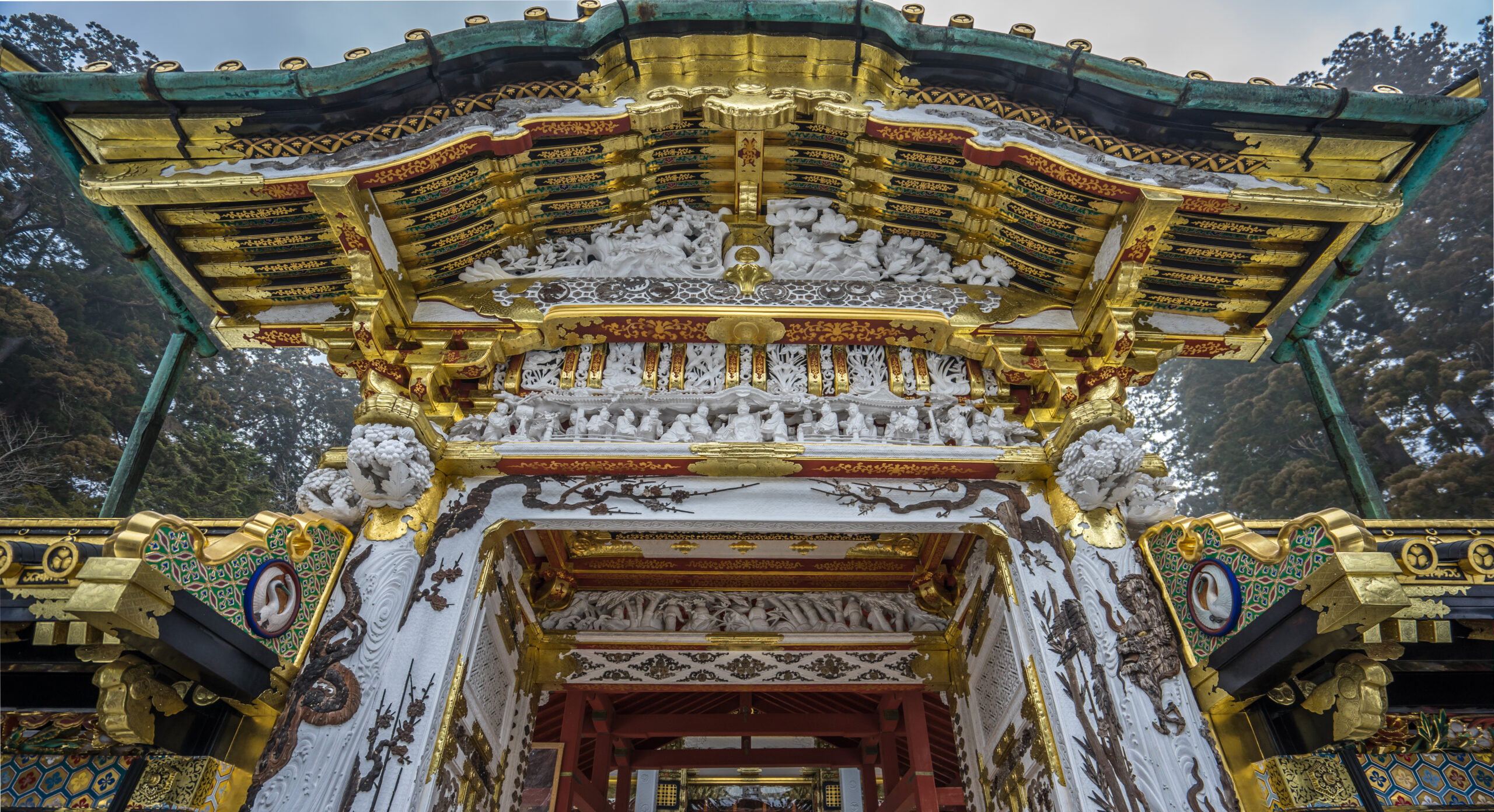
- Yomeimon Gate (National Treasure): One of Japan’s most beautiful gates, also called the “Gate of Lasting Days.” With 508 sculptures, its craftsmanship is so exquisite that one could gaze upon it all day without tiring, hence the name.
- Three Wise Monkeys (See No Evil, Hear No Evil, Speak No Evil): Famous sculptures carved on the wall of the Sacred Stable, expressing a human’s lifetime through eight monkey-themed stories.
- Sleeping Cat (National Treasure): A sculpture traditionally attributed to Hidari Jingoro, positioned above the entrance to the Oku-Shaindo passage. Known as a work symbolizing a time of peace.
- Main Hall, Stone Chamber, and Prayer Hall (National Treasure): Representative examples of Gongen-zukuri architecture, the interior features lavish paintings and gold leaf work that is impressive.
- Five-Story Pagoda (Important Cultural Property): A tower approximately 36 meters high with a unique structure where the central pillar floats above the ground, designed to be earthquake-resistant.
Visiting Information:
- Visiting hours: April–October 8:00 AM–5:00 PM, November–March 8:00 AM–4:00 PM
- Admission: Adults/High school students 1,300 yen, Elementary/Middle school students 450 yen
Nikko Rinnoji Temple: The Central Buddhist Temple of Nikko Mountain
Nikko Rinnoji Temple is the central temple of Nikko Mountain opened by Shodo Shonin and is a Tendai Buddhist monastic temple. Thirty-eight structures are registered as world heritage, with 2 designated as Important Cultural Properties.
Main Highlights:
- Sanbutsu Hall (Important Cultural Property): The largest wooden structure of Nikko Mountain, enshrining three Buddha statues: Senju Kannon, Amida Nyorai, and Batou Kannon. Each is considered the honchi (original form) of the deities of the Nikko Three Mountains (Nantai, Nyohou, and Tarou Mountains).
- Taiyuin Mausoleum: The mausoleum of the third shogun Tokugawa Iemitsu, with all 22 structures designated as Important Cultural Properties. With a calm atmosphere different from Toshogu, it features exquisite decorations.
- Goma Hall: An important religious facility where goma (fire ritual) practices are still performed.
- Jogyodo Hall: A hall where constant walking meditation is practiced, famous for its “crying dragon.” When a wooden clapper is struck beneath the dragon painted on the ceiling, a resonance phenomenon makes the dragon sound as if it is crying.
Visiting Information:
- Visiting hours: April–October 8:00 AM–5:00 PM, November–March 8:00 AM–4:00 PM
- Admission: Sanbutsu Hall Adults 400 yen, Elementary/Middle school students 200 yen / Taiyuin Mausoleum Adults 550 yen, Elementary/Middle school students 250 yen
Nikko Futarasan Shrine: Center of Nikko Mountain Worship
Nikko Futarasan Shrine is an ancient shrine with the main peak of Nikko Mountain, Nantai, as its sacred object, and a central figure in Nikko mountain worship. Twenty-three structures are registered as world heritage, with 1 designated as a National Treasure and 16 as Important Cultural Properties.
Main Highlights:
- Main Hall (Important Cultural Property): A beautifully lacquered red shrine enshrining three deities: Onamuchi no Mikoto, Tagori Hime no Mikoto, and Ajisuki Takahikone no Mikoto.
- Sacred Bridge (Important Cultural Property): A lacquered red bridge at the entrance to Nikko Mountain, one of Japan’s three most unusual bridges. Legend has it that it was built with the help of Fukuujutsu Ouji when Shodo Shonin opened Nikko Mountain.
- Sacred Garden: The vast grounds feature towering cedar trees centuries old, creating a sacred atmosphere.
- Fire Lantern: A stone lantern with a legend that fire orbs appear at night, bearing sword marks.
Visiting Information:
- Visiting hours: April–October 8:00 AM–5:00 PM, November–March 8:00 AM–4:00 PM
- Admission: Main Shrine Sacred Garden Adults 200 yen, Elementary/Middle school students 100 yen
Value as a Cultural Landscape
The registered area of the world heritage “Nikko’s Sacred Sites” includes not only the structures but also the natural environment surrounding them. This cultural landscape is an important element that enhances the value of Nikko’s Sacred Sites.
Cedar Grove and Forest Landscape
Along the approach to Nikko Toshogu Shrine stand towering cedar trees over 300 years old. These cedars were planted by Matsudaira Masatsuna, a close aide of Tokugawa Iemitsu, planting approximately 20,000 trees over more than 20 years, with about 13,000 remaining today. Designated as a Special Natural Monument, this cedar grove has been recognized by Guinness World Records as the world’s longest tree-lined avenue.
Creation of Sacred Space
The sacred space created through the integration of structures and natural environment is a major characteristic of Nikko’s Sacred Sites. With the Nikko Three Mountains (Nantai, Nyohou, and Tarou Mountains) in the background and shrine buildings surrounded by cedar forests, it embodies Japan’s traditional views of nature and religion.
Utilization of Water Systems and Topography
Water systems such as the Daiya River and Inari River play an important role in forming the landscape within Nikko Mountain. The Daiya River, where the Sacred Bridge spans, functions as a boundary separating the secular world from the sacred realm, symbolizing water’s purifying function in mountain worship.
Annual Events and Festivities
Traditional rituals and events are held throughout the year at Nikko’s Sacred Sites.
Major Spring Events
Yayoi Festival (Yayoi Matsuri)
- Period: April 13-17
- Location: Nikko Futarasan Shrine
- Content: A festival announcing spring to Nikko with over 1,200 years of history. Splendid flower floats parade through town, and on the 17th, the “buttsuke” occurs where east and west floats collide.
Nikko Toshogu Spring Grand Festival
- Period: May 17-18
- Location: Nikko Toshogu Shrine
- Content: The most important ritual held on the anniversary of Tokugawa Ieyasu’s death. On the 17th, equestrian archery rites are performed, and on the 18th, a procession of a thousand armed warriors unfolds, creating a magnificent scene like viewing an Edo period picture scroll.
Traditional Winter Events
Nikko Rinnoji Temple Gohan Ceremony (Gohan-shiki)
- Period: April 2
- Location: Nikko Rinnoji Temple Sanbutsu Hall
- Content: A traditional event continuing for approximately 1,200 years, an unusual festival where high-piled rice is forced upon visitors. Mountain priests in yamabushi attire serve mountainous bowls of rice to visitors in a unique ritual, praying for health and family safety.
Autumn Foliage Season
From mid-October to early November, Nikko’s Sacred Sites attracts many tourists as a famous autumn foliage viewing spot. The areas around the Sacred Bridge, Rinnoji’s Shoyo-en Garden, and Toshogu’s approach are particularly beautiful with the contrast of autumn colors and historical structures, making them popular photography spots.
Access and Tourism Information
Basic Information
Location: Yamanouchi, Nikko City, Tochigi Prefecture
Access Methods:
By Train:
- From JR Nikko Station or Tobu Nikko Station, take Tobu Bus “World Heritage Tour” for about 10 minutes, get off at “West Approach” or “Front Approach”
- By foot from the station takes approximately 30-40 minutes
By Car:
- Approximately 2 km from “Nikko IC” on the Nikko-Utsunomiya Expressway, about 5 minutes
- Parking: Multiple paid parking lots in the surrounding area (500 yen per day for regular vehicles)
Efficient Viewing Route
Here are model courses for efficiently viewing Nikko’s Sacred Sites in limited time.
Half-Day Course (approximately 3-4 hours):
- Sacred Bridge (photography)
- Nikko Toshogu Shrine (Yomeimon Gate, Three Wise Monkeys, Sleeping Cat, Main Hall)
- Nikko Futarasan Shrine (Main Hall, Sacred Garden)
Full-Day Course (approximately 6-7 hours):
- Sacred Bridge
- Nikko Toshogu Shrine (thorough viewing)
- Nikko Rinnoji Temple Sanbutsu Hall
- Nikko Futarasan Shrine
- Nikko Rinnoji Temple Taiyuin Mausoleum
Best Season for Tourism
While Nikko’s Sacred Sites has beauty throughout the seasons, particularly recommended times are:
- Spring (April-May): Fresh greenery is beautiful, and spring events are held
- Autumn (October-November): Spectacular autumn foliage and the most popular season
- Winter (December-February): Snow-covered shrine buildings are fantastical, and fewer tourists allow for quiet viewing
Points to Note When Visiting
- Time Required: At least a half day is needed to view all two shrines and one temple; a full day for thorough viewing
- Attire: With extensive grounds and many stone steps, comfortable shoes and clothing are recommended
- Photography: Photography is prohibited in many interior structures, so caution is necessary
- Crowds: The foliage season and major holidays are extremely crowded; early morning visits are recommended
Nearby Tourist Attractions
Visiting nearby attractions when going to Nikko’s Sacred Sites creates a more fulfilling trip.
Kegon Falls
One of Japan’s three most famous waterfalls, with water falling 97 meters. Located about 30 minutes by car from Nikko’s Sacred Sites.
Lake Chuzenji
Created by the eruption of Nantai Mountain, this is one of Japan’s premier high-altitude lakes at 1,269 meters elevation. Sightseeing cruises and lakeside walks are available.
Nikko Edo Village
A theme park recreating Edo period townscapes, popular with families. Located about 15 minutes by car from Nikko’s Sacred Sites.
Kinugawa Hot Spring
One of the Kanto region’s leading hot spring areas and ideal as a lodging base for Nikko sightseeing. Located about 30 minutes by car from Nikko’s Sacred Sites.
Efforts for World Heritage Protection
Various initiatives are undertaken to preserve and pass on the world heritage “Nikko’s Sacred Sites.”
Conservation and Restoration of Cultural Properties
Structures designated as National Treasures or Important Cultural Properties undergo regular conservation and restoration work. Notably at Nikko Toshogu, “Heisei Major Restoration” involved repairs of major structures including the Yomeimon Gate. Traditional techniques are employed in these restorations, contributing to the succession of craftsperson skills.
Environmental Conservation Activities
Regular cleanup and tree-planting activities involving local residents and volunteers are conducted to protect the cedar grove and maintain forest environments. Eco-tourism promotion is also being advanced to mitigate environmental impacts from increased tourism.
Education and Awareness Activities
Specialized guide services by the Nikko Dodo Guide Cooperative and cooperative programs with school education disseminate the value of world heritage. Additionally, multilingual pamphlets and websites provide comprehensive information for both domestic and international visitors.
Conclusion
The world heritage “Nikko’s Sacred Sites” located in Nikko City, Tochigi Prefecture, is a representative cultural heritage of Japan with approximately 1,200 years of history. Centered on two shrines and one temple—Nikko Toshogu Shrine, Nikko Rinnoji Temple, and Nikko Futarasan Shrine—a total of 103 National Treasures and Important Cultural Properties, together with the rich natural environment surrounding them, form a unique cultural landscape.
From its beginning with the opening of Nikko Mountain by Shodo Shonin through its development as a sacred site for mountain worship, and transformation into a splendid mausoleum of Tokugawa Ieyasu, Nikko’s Sacred Sites occupies an extremely important position in Japan’s religious, architectural, and artistic history. The unique culture where Shintoism and Buddhism are fused, the apex of Edo period artistic techniques, and space composition harmonizing with nature possess the universal value befitting a UNESCO World Heritage.
Nikko’s Sacred Sites, displaying beauty in each season, is a place of profound depth with new discoveries upon each visit. Its appeal also includes convenient access just two hours from Tokyo. Please visit this grand world heritage in person to experience the magnificent world woven by history, culture, and nature.
The world heritage “Nikko’s Sacred Sites” is a treasure of humanity to be passed from the past through the present and into the future. Understanding its value and transmitting it to future generations is the responsibility of we who live in the modern age.