Mt. Fuji and Yamanashi Prefecture’s World Heritage: The Complete Picture of Cultural Value Nurtured by Faith and Art
The Significance of Mt. Fuji’s Registration as a World Cultural Heritage Site
In June 2013, Mt. Fuji was officially registered as a UNESCO World Cultural Heritage site under the name “Mt. Fuji—Object of Faith and Source of Art.” This registration is proof that Mt. Fuji has been internationally recognized not merely as a beautiful mountain, but as a cultural landscape deeply rooted in the spiritual culture and artistic activities of the Japanese people.
Mt. Fuji’s value as a world heritage site is evaluated from two aspects—”object of faith” and “source of art”—based on its sacred and majestic landscape. Revered by people since ancient times and having produced countless works of art, Mt. Fuji is a precious cultural heritage that should be passed down to future generations as a symbol of Japan and a treasure of the world.
The 25 constituent assets of Mt. Fuji, which span Yamanashi and Shizuoka Prefectures, include not only Mt. Fuji itself but also surrounding shrines, lava tree molds, and lakes. These assets are protected as important evidence that tells the history of Mt. Fuji worship and artistic activities.
The Scope of Constituent Assets and Criteria of World Heritage “Mt. Fuji”
The asset range for Mt. Fuji as a World Cultural Heritage site is set primarily in areas above an altitude of approximately 1,500 meters. There is a clear reason for this scope setting: to protect areas that retain the sacred and majestic landscape particularly important for Mt. Fuji’s value.
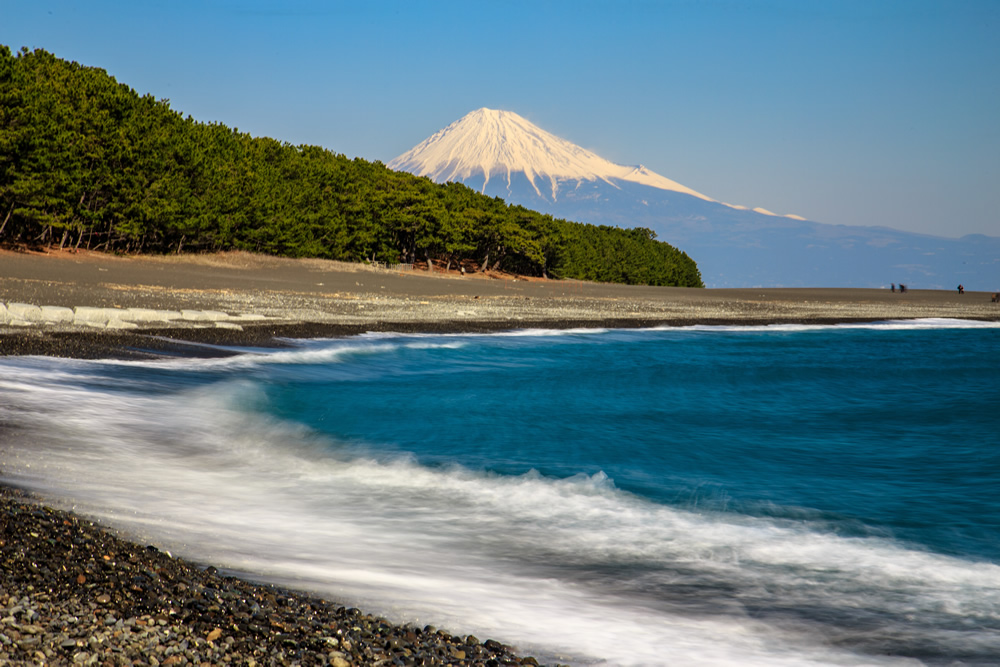
The asset range includes the Mt. Fuji domain (including faith relics at the summit), Fujisan Hongu Sengen Grand Shrine, Yamamiya Sengen Shrine, Murayama Sengen Shrine, Suyama Sengen Shrine, Fuji Sengen Shrine (Susono Sengen Shrine), Kawaguchi Sengen Shrine, Fuji Omuro Sengen Shrine, oshi residences, Oshino Hakkai, Funatsu Taiji Tree Mold, Yoshida Taiji Tree Mold, Hitotsu-Ana Fujiko Site, Shiraito Falls, and Miho Pine Grove.
These constituent assets serve as important evidence demonstrating the development process of Mt. Fuji worship and the historical background that supported artistic creative activities featuring Mt. Fuji. Particularly numerous constituent assets exist on the Yamanashi side, which has served as the center of Mt. Fuji worship.
History of Mt. Fuji Worship and Yamanashi Prefecture’s Role
Object of Faith from Ancient Times
Mt. Fuji has been revered as an object of faith since ancient times. Its volcanic activity instilled fear in people, leading to its veneration as a mountain inhabited by deities. While it is currently in a quiet period as an active volcano, it has historically erupted repeatedly, each time strengthening people’s faith.
During the Heian period, it developed as a sacred site for Shugendo (mountain asceticism), becoming a place for mountain training. A shrine dedicated to the Sengen deity was built at the summit of Mt. Fuji, and the number of ascetic monks and believers making pilgrimage ascents increased. In particular, the climbing trail from the Yamanashi side developed as a major route for faith-based mountain climbing.
The Culture of Fuji Societies and Oshi
During the Edo period, a folk religion called Fuji societies (Fuji-ko) spread explosively. Fuji societies were organized groups of believers centered on Mt. Fuji worship, spreading throughout the Kanto region centered on Edo. Members performed collective Mt. Fuji ascents, with their ultimate goal being to view the sunrise from the summit.
These Fuji societies were supported by people called oshi (mountain guides). The oshi served as guides to Mt. Fuji worship, operated lodgings to accommodate pilgrims, and provided climbing guidance and religious prayers. Many oshi residences remain in Fujiyoshida City, Yamanashi Prefecture. The Togawa Family Residence, a representative building, was constructed in 1768 and is designated as both a National Important Cultural Property and a constituent asset of the World Heritage site.
The oshi organized believers throughout the country and made significant contributions to the spread of Mt. Fuji worship. Their activities went beyond mere lodging operations, also serving the role of cultural exchange mediated through faith.
Sengen Shrines and Mt. Fuji Worship
Sengen shrines became the center of Mt. Fuji worship. Fujisan Hongu Sengen Grand Shrine serves as the head shrine, with many Sengen shrines built around Mt. Fuji. On the Yamanashi side are Kawaguchi Sengen Shrine, Fuji Omuro Sengen Shrine, Kitakuchi Honmiya Fuji Sengen Shrine, and others, each serving as a center for Mt. Fuji worship.
These shrines served as starting points for Mt. Fuji pilgrimages while also being centers of faith for local residents. Ancient documents and offerings preserved at these shrines have become valuable materials conveying the history of Mt. Fuji worship to the present day.
Mt. Fuji as a Source of Art
Woodblock Prints and Mt. Fuji
Mt. Fuji is one of the most important subjects in Japanese art history. Particularly in Edo-period woodblock prints, Mt. Fuji was repeatedly depicted, becoming known to the world as Japan’s representative landscape.
Famous woodblock print works such as Katsushika Hokusai’s “Thirty-Six Views of Mt. Fuji” and Utagawa Hiroshige’s “Fifty-Three Stations of the Tokaido” frequently feature Mt. Fuji. These works capture various appearances of Mt. Fuji, expressing its beauty as it changes with the seasons, times of day, and viewpoint.
Mt. Fuji as seen from the Yamanashi side is known for presenting a particularly beautiful appearance. Yamanashi has numerous scenic spots featuring Mt. Fuji, including views from Lake Kawaguchi and Lake Yamanaka, and the inverted Mt. Fuji reflected in Oshino Hakkai, which have continued to inspire artists.
Literature and Mt. Fuji
Mt. Fuji appears in numerous literary works. From the era of the Man’yōshū anthology to the present day, countless poems, haiku, and novels about Mt. Fuji exist. “From Tago’s shore, when I come out and look, pure white it stands, on Mt. Fuji’s lofty peak, snow is falling,” by Yamabe no Akahito, is one of the most famous poems composed about Mt. Fuji.
Even in the modern period, literary works featuring Mt. Fuji have been created, such as Osamu Dazai’s “One Hundred Views of Mt. Fuji” and Jiro Nitta’s mountain novels. These works demonstrate that Mt. Fuji is not merely a natural landscape but a cultural entity deeply connected to Japanese spirituality and aesthetic sense.
The Role of the Yamanashi Prefectural Mt. Fuji World Heritage Center
Facility Overview and Mission
Yamanashi Prefecture established and opened the “Yamanashi Prefectural Mt. Fuji World Heritage Center” on June 22, 2016, as a facility to communicate the value of World Heritage Mt. Fuji clearly to domestic and international audiences, and to serve as a base for conservation activities and research.
The center is located in Funatsu, Fujikawaguchiko Town, Minamitsuru District, Yamanashi Prefecture, near the entrance to the Fuji Subline. The facility consists of two buildings: the North Building, where exhibitions are centered on “nature,” and the South Building, where exhibitions are centered on “culture.”
The facility’s mission is to convey to visitors Mt. Fuji’s outstanding universal value as a World Heritage site while promoting activities to preserve that value for the future. Through exhibitions and educational programs, visitors can learn about Mt. Fuji’s nature, history, and culture.
Exhibition Content and Highlights
The North Building primarily features exhibitions related to Mt. Fuji’s nature. The geological characteristics, ecosystem, and meteorology of Mt. Fuji are explained clearly using videos and models. Visitors can also learn in detail about Mt. Fuji being an active volcano and its eruption history.
The South Building focuses on Mt. Fuji’s cultural aspects. Exhibitions are enriched with information about Mt. Fuji worship history, oshi culture, and the expression of Mt. Fuji in artistic works, helping visitors understand its value as a World Cultural Heritage site.
The center regularly holds special exhibitions and events, introducing the latest research results related to Mt. Fuji and seasonal attractions. It also functions as a center for disseminating research results and contributes to the accumulation of scientific knowledge regarding Mt. Fuji conservation.
Access and Usage Information
The Yamanashi Prefectural Mt. Fuji World Heritage Center is accessible by bus in approximately 15 minutes from Kawaguchiko Station on the Fujikyuko Line, or by car near the Fuji Subline entrance. The facility includes a parking lot and can serve as a base for Mt. Fuji sightseeing.
Detailed information such as opening hours and admission fees can be found on the facility’s official website. By stopping at the center before visiting Mt. Fuji, visitors can enjoy the mountain’s attractions with deeper understanding.
Details of Major Constituent Assets on the Yamanashi Side
Mt. Fuji Domain (Faith Relics at the Summit)
Many faith-related archaeological remains are preserved at Mt. Fuji’s summit. The summit houses the Okumiya (inner shrine) of Sengen Shrine, considered the most sacred place of Mt. Fuji worship. The “O-Hachi Meguri” circuit around the summit remains an important ritual of faith-based mountain climbing, observed by many climbers today.
Archaeological remains in the summit area include stone-stacked ritual sites and former mountain hut ruins. These are protected as valuable evidence telling the history of Mt. Fuji worship.
Oshino Hakkai
Oshino Hakkai refers to eight spring pools where Mt. Fuji’s groundwater emerges. The highly transparent beautiful water has played an important role as a place of ritual purification in Mt. Fuji worship.
The eight pools each have names: Deguchi Pool, Okama Pool, Sokonuke Pool, Choshi Pool, Yuki Pool, Nigori Pool, Kagami Pool, and Shobu Pool. These pools are formed from Mt. Fuji snowmelt water that has flowed through the underground for many years, maintaining a consistent temperature of approximately 13 degrees Celsius year-round.
Currently popular as a tourist destination, it serves as a place where visitors can experience the blessings of Mt. Fuji’s groundwater.
Funatsu Taiji Tree Mold and Yoshida Taiji Tree Mold
Taiji tree molds are cavities formed when lava flows encased trees, which subsequently burned away. The Funatsu Taiji Tree Mold and Yoshida Taiji Tree Mold are lava caves formed by Mt. Fuji’s volcanic activity. They are called “taiji” (uterus) because their shape resembles a womb.
As objects of faith, entering the taiji mold signified a ritual of spiritual rebirth. Fuji society believers considered taiji touring to be one of their important training practices. These tree molds are valuable assets demonstrating the unique culture created by the connection between Mt. Fuji’s volcanic activity and worship.
Oshi Residences (Togawa Family Residence, etc.)
Oshi residences that once accommodated Mt. Fuji pilgrims still remain in Fujiyoshida City. The Togawa Family Residence, built in 1768, is a representative example and is designated as a National Important Cultural Property.
Oshi residences are characterized by spacious tatami-mat rooms for accommodating many pilgrims and a prayer hall for conducting religious ceremonies. From the building’s structure and layout, visitors can understand what Mt. Fuji society activities were like at that time.
Besides the Togawa Family Residence, other oshi-related buildings such as the Former Togawa Family Residence (Tokakedo) are preserved. The Kamiyoshida area of Fujiyoshida City has become an important historical landscape transmitting oshi culture to the present day.
Kitakuchi Honmiya Fuji Sengen Shrine
Kitakuchi Honmiya Fuji Sengen Shrine is located at the starting point of the northern climbing trail of Mt. Fuji (Yoshida Trail). The main hall, rebuilt in 1480 (Bunmei 12), is designated as a National Important Cultural Property.
The shrine’s precinct contains many stone monuments and offerings related to Mt. Fuji worship, speaking to the prosperity of Fuji societies. Along the Yoshida Trail starting from the shrine, numerous stone monuments and small shrines are scattered, testifying to its history as a faith-based climbing route.
Kawaguchi Sengen Shrine
Kawaguchi Sengen Shrine is an ancient shrine said to have been founded to quell Mt. Fuji’s volcanic eruptions. The shrine precinct contains a giant tree called the “Seven Cedars,” with an age exceeding 1,200 years, speaking to the shrine’s long history.
The shrine is located on the north shore of Lake Kawaguchi, in a scenic area with Mt. Fuji in direct view. The main hall was built in 1605 and is designated as a Yamanashi Prefecture cultural property.
Fuji Omuro Sengen Shrine
Fuji Omuro Sengen Shrine is a branch shrine of a shrine that was originally enshrined on Mt. Fuji itself; its honmiya (main shrine) still remains at the second station on Mt. Fuji. This honmiya is a valuable existence as the oldest building structure remaining on Mt. Fuji.
The branch shrine is located on the shore of Lake Kawaguchi and is characterized by its beautiful red-lacquered hall. The main hall, built in 1612 (Keichi 17), is designated as an Important Cultural Property.
Mt. Fuji’s Nature and Geological Characteristics
Mt. Fuji as an Active Volcano
Mt. Fuji is a currently active volcano. Its last eruption was the Hoei eruption in 1707, when the Hoei crater formed on the mountainside. While currently in a quiet period, volcanic activity is continuously monitored.
Mt. Fuji’s geological history extends back approximately 100,000 years. The currently beautiful conical mountain shape was formed through repeated eruptions and lava accumulation. Mt. Fuji is a type of volcano called a stratovolcano, with its current form created by the alternating layering of lava and volcanic ash.
Altitude and Climate
Mt. Fuji stands at 3,776 meters above sea level, the highest peak in Japan. Due to this height, climate zones change significantly from the mountain base to the summit. The area near the summit has a high-altitude climate with low temperatures even in summer and frequent strong winds.
Mt. Fuji’s weather is changeable, with sudden weather changes occurring. For this reason, climbers must be adequately equipped and check weather information. Year-round, the summit often falls below freezing, with severe cold in winter.
Ecosystem and Natural Environment
Mt. Fuji contains diverse ecosystems corresponding to altitude. The base is covered with deciduous and coniferous forests, with vegetation changing as altitude increases. Above the forest line, in the alpine zone, alpine plants naturally grow.
Mt. Fuji’s natural environment is characterized by the unique topography formed by volcanic activity and the organisms adapted to it. On lava flow sites, special vegetation specifically established on lava forms Mt. Fuji’s unique ecosystem.
Mt. Fuji Climbing and the Yamanashi Side Climbing Trail
Yoshida Route (Yoshida Climbing Trail)
The representative climbing route from the Yamanashi side is the Yoshida Route. This route starts from the fifth station of the Fuji Subline and aims for Mt. Fuji’s summit. The Yoshida Route is the busiest climbing route, with abundant facilities including mountain huts and first-aid stations.
The Yoshida Route has a long history. It formerly started from Kitakuchi Honmiya Fuji Sengen Shrine and proceeded through Umagaeshi to reach the summit. Currently, vehicular access is available to the fifth station, so most climbers begin from there.
The climbing season runs from early July to early September, during which mountain huts operate and climbing trails are maintained. The style of night climbing to view the sunrise from the summit is popular, though considering the risk of altitude sickness, spending a night at a mountain hut to acclimate is recommended.
Susono Route
The Susono Route is a trail from the Shizuoka side but merges with the Yoshida Route at the eighth station. This route allows for an extended walk through forested areas and offers nature-rich climbing.
Climbing Precautions and Environmental Conservation
Mt. Fuji climbing requires thorough preparation. The high altitude presents risks of altitude sickness, and weather conditions are severe. Appropriate equipment, sufficient water and food, and cold-weather clothing are essential.
Furthermore, to protect Mt. Fuji’s environment as a World Heritage site, climbers must follow conservation rules such as taking garbage with them and not straying from the trail. Yamanashi Prefecture has established a “Mt. Fuji Conservation Cooperation Fee” system to encourage climber participation.
Issues Surrounding Mt. Fuji and Conservation Activities
Environmental Conservation Efforts
Since World Heritage registration, Mt. Fuji has received numerous visitors from both within and outside Japan. While this is evidence that Mt. Fuji’s value is widely recognized, it has also created the challenge of increased environmental burden.
Yamanashi Prefecture is conducting diverse conservation activities to protect Mt. Fuji’s environment. These include trail maintenance, toilet improvements, garbage management, and vegetation protection.
Additionally, Mt. Fuji cleanup activities are regularly held as volunteer events. Residents, administration, businesses, and NPOs cooperate to continue efforts to preserve Mt. Fuji’s beautiful environment.
Addressing Overtourism
Increased climbers following World Heritage registration have created overtourism problems. Particularly during peak climbing season, trail congestion and overcrowded mountain huts occur.
To address this issue, Yamanashi Prefecture is advancing discussions on appropriate management of climber numbers. Various countermeasures are being debated, including introducing advance reservation systems and spreading climbing times.
Transmitting Cultural Value
To pass Mt. Fuji’s World Heritage value to future generations, both physical conservation and understanding and transmission of cultural value are important.
Centered on the Mt. Fuji World Heritage Center, Yamanashi Prefecture provides opportunities to learn about Mt. Fuji’s history and culture through educational programs, lectures, and exhibition events. Investigation and information dissemination are also advancing for intangible cultural heritage, such as oshi culture and Fuji society history.
Regional school education includes curriculum about Mt. Fuji, creating opportunities for children to deepen their understanding of this community treasure.
Mt. Fuji and Yamanashi Prefecture’s Tourism
The Charm of the Fuji Five Lakes Area
At the base of Mt. Fuji on the Yamanashi side spread the Fuji Five Lakes (Lake Kawaguchi, Lake Yamanaka, Lake Saiko, Lake Shoji, and Lake Motsu), each formed by Mt. Fuji’s volcanic activity, with unique charm.
Lake Kawaguchi is the most developed for tourism, with abundant art museums, museums, and hot spring facilities. The view of Mt. Fuji from the lakeshore is splendid, particularly the inverted Mt. Fuji scenery, which captivates many photographers.
Lake Yamanaka is the highest of the Fuji Five Lakes and has the largest surface area. Resort facilities and campgrounds dot the lakeshore; it serves as a summer retreat and in winter is popular as a Diamond Fuji photography spot.
Lake Saiko, Lake Shoji, and Lake Motsu maintain relatively quiet environments, ideal for nature appreciation. Lake Motsu is particularly known as the model for the Mt. Fuji depicted on the reverse of the thousand-yen note.
Mt. Fuji Through the Four Seasons
Mt. Fuji’s charm changes dramatically with the seasons. Spring brings the beautiful contrast of cherry blossoms and Mt. Fuji’s lingering snow; summer offers lush nature and the excitement of climbing season.
Autumn creates spectacular views combining fall foliage with Mt. Fuji, while winter shows Mt. Fuji at its most beautiful, dressed in snow. Mt. Fuji seen in winter’s clear air carries an especially divine atmosphere.
Hot Springs Around Mt. Fuji
Many hot spring areas exist on the Yamanashi side of Mt. Fuji’s base. At places such as Lake Kawaguchi Hot Springs, Lake Yamanaka Hot Springs, and Fujiyoshida Hot Springs, visitors can enjoy hot springs while viewing Mt. Fuji.
These hot springs derive from Mt. Fuji’s volcanic activity, offering visitors a chance to feel Mt. Fuji’s blessings. They are popular both as places to recover from climbing fatigue and as bases for sightseeing.
Looking Toward Mt. Fuji’s Future
Realizing Sustainable Tourism
To pass Mt. Fuji to future generations, realizing sustainable tourism is essential. Yamanashi Prefecture is conducting various initiatives to both conserve the environment and promote tourism.
Ecotourism promotion, enhanced environmental education, and cooperation with residents represent a multifaceted approach to protecting Mt. Fuji’s value while utilizing it.
Advancing Investigation and Research
The Mt. Fuji World Heritage Center continuously conducts investigations and research related to Mt. Fuji. Research is performed not only from natural science perspectives but also from diverse fields including history, folklore, and art.
These research results form the foundation for deeper understanding of Mt. Fuji’s value and development of effective conservation policies. Publicly releasing research findings also contributes to educational activities deepening Mt. Fuji understanding.
International Dissemination
Communicating Mt. Fuji’s value as a World Heritage site to international society is also an important task. Yamanashi Prefecture actively conducts international communication through multilingual information provision, presentations at international conferences, and information provision to overseas media.
Mt. Fuji, as a representative cultural heritage of Japan, is known worldwide. Promoting understanding of its true value and international cooperation to preserve it as treasure common to humanity is required.
Conclusion
Mt. Fuji was registered as a World Cultural Heritage site in 2013 under the name “Mt. Fuji—Object of Faith and Source of Art,” transforming from a Japanese treasure into a world treasure. Yamanashi’s side contains numerous constituent assets and has played an important role as the center of Mt. Fuji worship.
Mt. Fuji’s value as a World Heritage site is evaluated from two aspects—”object of faith” and “source of art”—based on its sacred and majestic landscape. The unique cultures surrounding Mt. Fuji, including oshi culture, Fuji societies, and Sengen shrines, are precious heritage reflecting Japanese spirituality and aesthetic sense.
The Yamanashi Prefectural Mt. Fuji World Heritage Center is an important facility communicating Mt. Fuji’s value and serving as a base for conservation activities. Visitors can deepen their learning about Mt. Fuji’s nature, history, and culture here.
Multiple efforts are necessary to pass Mt. Fuji to future generations, including environmental conservation, sustainable tourism, and transmission of cultural value. Yamanashi Prefecture continues efforts to protect and utilize Mt. Fuji’s value through cooperation among local residents, administration, research institutions, and tourism businesses.
World Heritage Mt. Fuji, as treasure common to humanity, bears the mission to transmit its beautiful appearance and rich culture to the future. When each of us understands Mt. Fuji’s value and cooperates in its conservation, we contribute to preserving this precious heritage.