Iwami Ginzan Heritage and Its Cultural Landscape | Thorough Explanation of Shimane Prefecture’s World Heritage
What is the Iwami Ginzan Heritage
The Iwami Ginzan Heritage and Its Cultural Landscape is a representative mining site heritage located in Oda City, Shimane Prefecture. From its discovery in 1527 to its closure in 1923, operations continued for approximately 400 years, and on July 2, 2007, it was registered as Japan’s 14th World Heritage Site and Asia’s first mining heritage.
The formal name is “Iwami Ginzan Heritage and Its Cultural Landscape,” and rather than merely being a mining site, it represents a comprehensive cultural heritage encompassing the entirety of mining development from silver extraction and refining to transportation and shipment. Its scope extends to 529.17 hectares (equivalent to approximately 11 Tokyo Disneyland parks), and including buffer zones, it occupies a vast area of 3,134 hectares.
Background of World Heritage Registration
The background to Iwami Ginzan’s World Heritage registration lies in its historical importance in significantly influencing global silver circulation from the 16th to 17th centuries. At that time, as Japan’s largest silver mine, Iwami Ginzan was a central force supporting Japan’s silver production, accounting for approximately one-third of the world’s silver output.
On June 28, 2007, at the 31st World Heritage Committee held in Christchurch, New Zealand, the outstanding universal value of Iwami Ginzan Heritage was recognized, and its formal registration as a World Cultural Heritage Site was decided. This registration was highly evaluated not only for its value as Japan’s industrial heritage but also as a model of sustainable mining development coexisting with the natural environment.
Constituent Assets and Cultural Landscape of Iwami Ginzan
The Iwami Ginzan Heritage and Its Cultural Landscape consists of 14 constituent assets, classified into three categories: “Silver Mining Sites and Mining Towns,” “Ports and Port Towns,” and “Roads.” Together, these convey a complete system from silver production to distribution to the present day.
Silver Mining Sites and Mining Towns
Silver mining sites form the core of Iwami Ginzan, with over 600 underground passages called “mabu” remaining. These mabu are hand-dug tunnels created by advancing through bedrock using primitive tools such as chisels and hammers, representing valuable remains that tell of the traditional techniques and hardships of mining laborers of that era.
Representative mabu include the following:
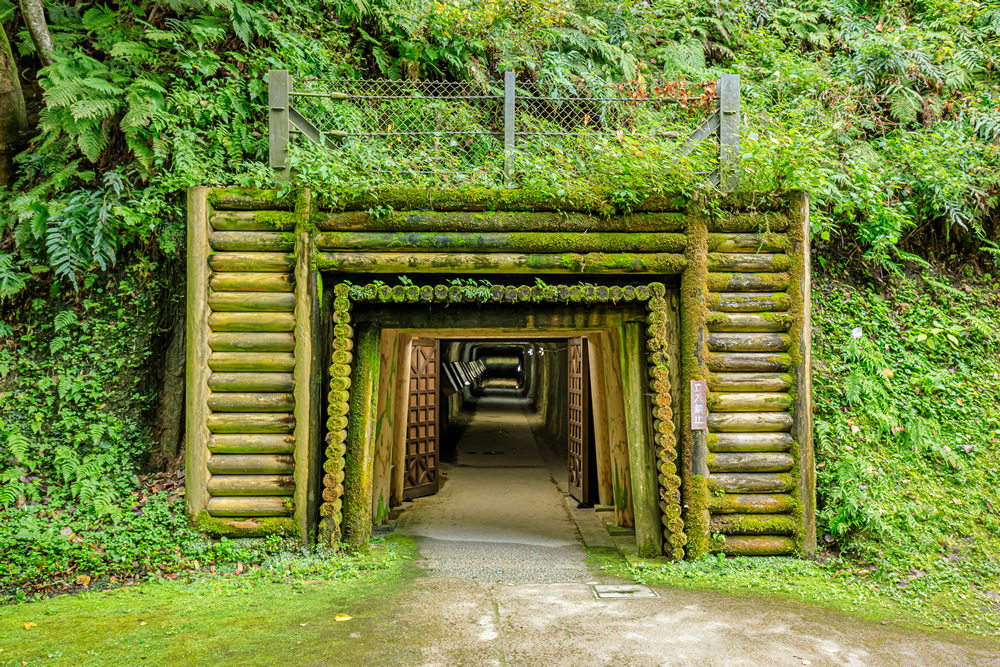
Ryugenji Mabu: The only mabu open to the general public, with a total length of approximately 600 meters. Inside, mining marks and chisel traces from that era remain clearly visible, allowing direct experience of Edo period silver production technology. Countless chisel marks from miners of that time remain on the walls, conveying the reality of human-powered mining to the present day.
Okubo Mabu: One of the largest mabu in Iwami Ginzan, with a total length of approximately 900 meters. Usually closed to the public, the interior can be viewed through limited tours. Hand-dug tunnels from the Edo period and modern mining marks from the Meiji period coexist, providing a valuable location to observe technological changes over time.
The town of Omori, a mining town, retains the townscape where people working in the silver mine and their families lived. Samurai residences, merchant houses, temples and shrines remain in their original forms, and approximately 400 residents currently continue to live there. This aspect as a “living heritage” enhances the value of Iwami Ginzan’s cultural landscape.
Kumagai Family Residence: A merchant house representative of the Omori district, designated as a National Important Cultural Property. The main building, constructed in the late Edo period, is a valuable structure conveying the lifestyle of wealthy merchants who prospered through silver mine management and sake brewing. The dirt floor, reception rooms, and storehouses remain preserved as they were, allowing visitors to understand the living culture of merchants who supported the mining town’s economy.
Ports and Port Towns
Silver produced at Iwami Ginzan was shipped to the entire nation and the world through two ports.
Yunotsu: A port town located approximately 12 kilometers northwest of Iwami Ginzan, and one of the primary ports for silver shipment. The townscape of a port town prosperous from the medieval to early modern periods is well preserved and has been selected as an Important Traditional Building Preservation District. The unique landscape, with town houses built along narrow alleys and combining a history as a hot spring town, is charming.
Okidomari: A small port that functioned as the outer port of Yunotsu, specialized in silver shipment facilities. Stone-built breakwaters and ship launching facilities remain to this day, conveying the appearance of port facilities from that era. The port remains standing in a quiet inlet, serving as important evidence of silver’s maritime transportation reality.
These port towns were not merely shipping points but also carried out functions such as silver refining, inspection, and storage. The overall logistics system connecting ports and mines constitutes an important element of Iwami Ginzan’s cultural landscape.
Roads
The roads connecting silver mining sites and ports played an important role as silver transport routes. Two main roads, the Tomonoura Road and Yunotsu Okidomari Road, remain winding through mountainous areas today.
Historical remains such as milestone markers, direction posts, and stone pavements are scattered along these roads, conveying the reality of transportation infrastructure from that era. One can imagine the hardships of people carrying silver along steep mountain paths. The roads are well preserved, and traveling on foot allows visitors to experience the silver distribution routes.
History and Development of Iwami Ginzan
From Discovery to Its Peak
The history of Iwami Ginzan begins in 1526 (Daiei 6), when Kamiya Jutetei, a wealthy merchant from Hakata, discovered a silver ore vein. Full-scale mining began in the following year of 1527, and during the chaos of the Warring States period, surrounding daimyo fiercely competed for control of this silver mine.
In 1533, a revolutionary refining technique called the ash blowing method transmitted from the Korean Peninsula was introduced. This technological innovation caused silver production efficiency to increase dramatically, and Iwami Ginzan underwent rapid development. The ash blowing method is a technique that separates silver using lead, enabling the production of large quantities of high-purity silver compared to conventional methods.
From the late 16th century to the early 17th century was Iwami Ginzan’s peak period. During this time, an estimated 38 tons of silver were produced annually. At that time, Japan accounted for approximately one-third of the world’s silver output, with Iwami Ginzan at its center. Silver produced here became known overseas as “Soma silver” and played an important role in East Asian trade.
Management System During the Edo Period
After the Battle of Sekigahara in 1600, Iwami Ginzan became directly controlled territory (tenryo) of the Tokugawa shogunate. The shogunate placed silver mine magistrates and implemented strict management systems, controlling silver production and distribution. Throughout the Edo period, Iwami Ginzan continued to function as an important revenue source for shogunate finances.
During the Edo period at Iwami Ginzan, a management system was established where “mine masters” obtained mining rights and employed “miners” called “horiko.” Dozens to hundreds of workers worked at a single mabu, with mining operations continuing day and night. Under severe working conditions, many miners lost their lives to accidents in the tunnels or lung diseases caused by dust.
A magistrate’s office was placed in the Omori district, functioning as the administrative, judicial, and economic center of the silver mine. At its peak, approximately 200,000 people are said to have lived there, prospering greatly as a mining town. The town had shops, inns, temples and shrines, and formed an independent culture and economic sphere.
Changes from the Meiji Period Onward
In the late Edo period, silver output gradually decreased as ore veins became depleted. However, after the Meiji period began, production temporarily recovered with the introduction of modern mining techniques.
In 1886 (Meiji 19), the Fujita Group (later the Fujita zaibatsu) acquired management rights and introduced Western modern mining techniques. Vertical shaft excavation, steam-powered water drainage and transportation systems, and chemical refining methods were adopted, with copper production also becoming full-scale in addition to silver.
In Okubo Mabu, one can observe where Edo period hand-dug tunnels and Meiji period modern tunnels intersect, visually understanding technological change. Meiji period tunnels are characterized by orderly shapes from machine digging, clearly distinguishable from irregular hand-dug tunnels from the Edo period.
However, ore vein depletion could not be stopped, and mining ceased in 1923 (Taisho 12). Approximately 400 years of Iwami Ginzan’s history reached a turning point here. It temporarily reopened afterward, but completely closed in 1943.
Outstanding Universal Value of Iwami Ginzan
A condition for World Heritage registration is possessing “outstanding universal value.” The Iwami Ginzan Heritage and Its Cultural Landscape received registration by meeting the following three evaluation criteria.
Criterion (ii): Evidence of Cultural Exchange
Iwami Ginzan played an important role in economic and cultural exchange between East Asia and the Western world from the 16th to 17th centuries. Silver produced here circulated to Europe through Portuguese and Spanish merchants, and to the Ming and Qing dynasties of China, significantly impacting the world economy.
In particular, the introduction and development of the ash blowing method, a refining technique transmitted from the Korean Peninsula, provides concrete evidence of technological exchange in East Asia. This traditional technique enabled efficient silver production while minimizing environmental burden and was inherited through later periods.
Criterion (iii): Evidence of Cultural Tradition
Mining development at Iwami Ginzan reflects Japan’s unique cultural traditions and techniques. The essence of traditional Japanese mining technology is concentrated, including tunnel excavation by hand-digging, wooden support systems for tunnels, and drainage and ventilation systems.
Additionally, a unique social system centered on the mine was established, including the formation and maintenance of mining towns, the living culture of mining laborers, and silver distribution systems. These serve as typical examples of Japanese mining culture, well preserved to the present day.
Criterion (v): Outstanding Example of Traditional Settlement
The Iwami Ginzan Heritage and Its Cultural Landscape represent an excellent example of sustainable land use where mining development and the natural environment are in harmony. High evaluation was given to the point that over 400 years of operations continued without large-scale forest felling or environmental destruction, while conserving the surrounding natural environment.
The cultural landscape where silver mining sites, mining towns, port towns, and roads integrate together exemplifies human activities coexisting with the natural environment. Today, residents in the Omori district continue to live within the traditional townscape, functioning as a “living cultural heritage.”
This aspect of “industrial heritage coexisting with the natural environment” was one of the most important evaluation points in Iwami Ginzan’s World Heritage registration. While many mines involve environmental destruction, at Iwami Ginzan, planned reforestation and water source protection were implemented, putting sustainable development into practice.
Major Attractions of Iwami Ginzan
Iwami Ginzan World Heritage Center
The starting point for Iwami Ginzan tourism is the Iwami Ginzan World Heritage Center. Established following World Heritage registration in 2007, this facility allows visitors to learn in detail about Iwami Ginzan’s history, technology, and culture.
The exhibition room displays a life-sized replica model of a mabu, mining tools, explanations of refining technology, and excavated items, making it ideal for understanding the overall picture of the silver mine. Additionally, heritage site guidance and tourism information are provided, allowing visitors to obtain information for efficiently touring Iwami Ginzan.
Currently, display renovation construction is planned for the 20th anniversary of World Heritage registration in 2027 and the 500th anniversary of Iwami Ginzan’s discovery, but heritage site guidance, tourism information, restrooms in the building, the limited Okubo Mabu tour, experience programs, and merchandise sales remain available as usual.
The Omori Townscape
The Omori district is an Important Traditional Building Preservation District retaining strong traces of an Edo period mining town. Continuing for approximately 2.5 kilometers, the townscape has samurai residences, merchant houses, temples and shrines built in rows, conveying life from that era to the present.
Historical structures such as the magistrate’s office ruins, samurai residences, and the Kumagai Family Residence are scattered throughout the central part of the town. The structure of the town, including narrow alleys, stone walls, and waterways, remains as it was in the Edo period, offering the sensation of stepping into history simply by walking through it.
In recent years, cafes, miscellaneous goods shops, and galleries utilizing old houses have increased, creating a unique atmosphere blending history and modernity. It is an excellent example of “living heritage” that preserves traditional townscape while accommodating contemporary life and tourism.
Ryugenji Mabu and the Silver Mining District
Ryugenji Mabu is the only tunnel open to the general public and is a highlight of Iwami Ginzan tourism. A tunnel developed in the mid-Edo period, approximately 270 meters of its total length of approximately 600 meters is available for viewing.
Inside the tunnel, the temperature is maintained at approximately 13 degrees Celsius year-round, cool in summer and warm in winter, creating a unique environment. Countless chisel marks remain on walls, vividly conveying the reality of hand-operated mining. The tunnel height allows adults to progress in a stooped position, allowing visitors to experience the harsh working conditions of miners of that era.
In the silver mining district, besides Ryugenji Mabu, many mabu tunnel openings remain, allowing visitors to experience the large scale of the silver mine. The surrounding mountains feature a unique landscape called “Ginzan Sakuide” created by mining.
Yunotsu and Okidomari Port Towns
Yunotsu is a port town that prospered as a silver shipment port and has been selected as an Important Traditional Building Preservation District. The charm lies in the unique townscape of merchant houses built along narrow alleys and combining a history as a hot spring town.
Yunotsu Hot Spring is not a constituent asset of the World Heritage Site, but is a historic hot spring that soothed the fatigue of people working at the silver mine. Currently, two public bathhouses, the Motoyu and Yakushi-yu, operate, allowing visitors to enjoy hot springs in a retro atmosphere.
Okidomari is a small port that functioned as Yunotsu’s outer port, with stone-built breakwaters and ship launching facilities remaining in a quiet inlet. It is a valuable location to learn about a port specialized in silver shipment.
Access to Iwami Ginzan and Tourism Information
Access Methods
Public Transportation:
- Approximately 30 minutes by Ishimi Traffic Bus “Omori/Daiya Line” from JR Sanin Main Line “Oda City Station,” getting off at “Omori” bus stop
- Approximately 2 hours by express bus from Hiroshima Airport; approximately 1 hour 30 minutes by bus and JR from Izumo Airport
By Car:
- Approximately 10 minutes from “Oda Chuo/Iwami Ginzan IC” on the Sanin Expressway
- Parking available at the Iwami Ginzan World Heritage Center (traffic regulations apply to the Omori district, so use of the center parking lot is recommended)
Tourism Tips
It is recommended to allocate at least half a day for Iwami Ginzan tourism, ideally a full day. After gaining basic knowledge at the Iwami Ginzan World Heritage Center, the standard course is to tour the Omori district and Ryugenji Mabu by rental bicycle or on foot.
From the Omori district to Ryugenji Mabu is approximately 2.3 kilometers away, taking about 40 minutes on foot one way. Using a rental bicycle allows more efficient tourism. However, the road to the silver mining district has some steep slopes, so those without confidence in their physical fitness are recommended to use an electrically assisted bicycle.
If time permits, it is also good to extend your visit to Yunotsu and Okidomari, experiencing the entire silver distribution route. It is approximately 20 minutes by car from the Omori district to Yunotsu.
Tourism Precautions
The Omori district is currently a “living heritage” where residents continue to live. Tourists are required to respect residents’ lives and enjoy the townscape quietly. Unauthorized entry onto private property and loud conversation should be avoided.
Inside Ryugenji Mabu, the ground is slippery, so visiting in easy-to-walk shoes is essential. Additionally, the tunnel is narrow with low ceilings in some areas, requiring attention to the ceiling.
In summer, temperatures rise, so do not forget water for heat illness prevention. In winter, there is the possibility of snow and frost, so check weather information in advance.
Preservation and Inheritance Efforts for Iwami Ginzan
Progress in Investigation and Research
At Iwami Ginzan Heritage, continuous investigation and research continues following World Heritage registration. With Shimane Prefecture and Oda City taking the lead, archaeological excavation surveys, research of historical documents, and building surveys are being conducted.
Through these investigations, new findings are continuously emerging, such as details of silver extraction technology, urban structure of mining towns, and reality of distribution systems. Recent work particularly includes clarification of refining technology using scientific analysis methods and restoration of the natural environment of that era through environmental archaeological methods.
Preservation Management Plan
To preserve and inherit the value as a World Heritage Site for future generations, the “Iwami Ginzan Heritage and Its Cultural Landscape Preservation Management Plan” has been formulated. Based on this plan, heritage preservation, landscape maintenance, public use, and investigation and research are comprehensively advanced.
Particularly important is preservation of the Omori district townscape. As an Important Traditional Building Preservation District, a subsidy system for building repair and landscape improvement is in place, maintaining historical landscape. Residents and administration cooperate to aim for coexistence of contemporary life and historical landscape.
Cultural Tourism Promotion and Regional Revitalization
A cultural tourism promotion regional plan with Iwami Ginzan Heritage and Its Cultural Landscape as its core has been formulated, aiming at coexistence of cultural resource preservation and tourism promotion. This plan targets 529 hectares of the core zone and 3,134 hectares including the buffer zone to promote sustainable tourism.
Efforts continue to maintain balance between residents’ lives and tourism, disseminating the value of Iwami Ginzan domestically and internationally. Diverse initiatives are being implemented, including utilization of old houses, enhancement of guided tours, and development of educational programs.
Conclusion: The Universal Message Conveyed by Iwami Ginzan
The Iwami Ginzan Heritage and Its Cultural Landscape is not merely a past mining heritage. It continues to send a universal message that resonates with modern society: coexistence of humans and nature, sustainable resource development, and the importance of cultural exchange.
The history of Iwami Ginzan, which continued operations for 400 years from the 16th to 20th centuries while taking care of the environment, was an advanced initiative that resonates with today’s Sustainable Development Goals (SDGs). The wisdom of ancestors who practiced planned forest management and water source protection without large-scale environmental destruction offers much insight to us today.
Furthermore, the cultural landscape where silver mining sites, mining towns, port towns, and roads integrate provides an important perspective in considering the value of industrial heritage. Rather than isolated structures, Iwami Ginzan teaches the importance of comprehensively preserving the entire system from production to distribution.
Visiting Oda City in Shimane Prefecture and experiencing the Iwami Ginzan Heritage and Its Cultural Landscape offers the opportunity to deeply consider Japan’s history, cultural exchange with the world, and the nature of sustainable society. It is our responsibility as contemporary people to understand its value as a World Heritage Site and pass it on to future generations.
2027 marks the 20th anniversary of World Heritage registration and the 500th anniversary of Iwami Ginzan’s discovery. This milestone is the perfect opportunity to visit Iwami Ginzan and experience firsthand its history, culture, and coexistence with nature.