Atomic Bomb Dome, Hiroshima Prefecture: World Heritage Site – Comprehensive Guide to History, Registration, and Tourism Information
The Atomic Bomb Dome, located in Naka Ward, Hiroshima City, Hiroshima Prefecture, is a structure that conveys the devastation of the nuclear weapon used for the first time in human history, registered as a UNESCO World Heritage Site (Cultural Heritage) in December 1996. Its official name is “Hiroshima Peace Memorial,” and it is counted as one of the “negative world heritage sites,” continuously appealing for the abolition of nuclear weapons and the importance of lasting world peace as a peace memorial common to all humanity.
This article comprehensively explains the detailed history from the construction of the Atomic Bomb Dome through its exposure to the bomb, preservation efforts, and registration as a world heritage site, as well as tourism information and points of interest around the Peace Memorial Park, providing information that visitors and researchers from across the nation should know.
History of the Atomic Bomb Dome: From Construction to Bombing
Birth as the Hiroshima Prefecture Product Exhibition Hall
The Atomic Bomb Dome building was completed in April 1915 (Taisho 4) as the “Hiroshima Prefecture Product Exhibition Hall.” The design was undertaken by Czech architect Jan Letzel, adopting a European architectural style that was rare at the time. It was a three-story building.
The purpose of its construction was to improve the quality of Hiroshima Prefecture’s products and contribute to industrial development. With three stories above ground and partially five stories, the structure featured an elliptical dome roof in the central section, reaching a height of approximately 25 meters. The exterior walls were finished with stone and mortar, and copper sheeting was used for the window frames, making it a representative modern building in Hiroshima City at the time, beloved by local residents.
Renaming to Hiroshima Prefecture Industrial Promotion Hall
In 1921 (Taisho 10), it was renamed the “Hiroshima Prefecture Merchandise Exhibition Place,” and subsequently in 1933 (Showa 8), it was renamed the “Hiroshima Prefecture Industrial Promotion Hall.” This building served as a hub for industrial promotion in Hiroshima Prefecture, functioning as a venue for various exhibitions and expos, playing a central role in regional cultural and economic activities.
The building’s distinctive dome roof was covered with copper sheeting, gleaming with a green patina. This beautiful exterior would become imprinted in the memories of many citizens as a landmark of Hiroshima City.
August 6, 1945: Atomic Bomb Dropped
At 8:15 AM on August 6, 1945 (Showa 20), the atomic bomb, used in actual warfare for the first time in human history, was dropped on Hiroshima City by the American B-29 bomber “Enola Gay.” The bomb detonated in the sky approximately 160 meters southeast of the Hiroshima Prefecture Industrial Promotion Hall, at an altitude of approximately 600 meters.
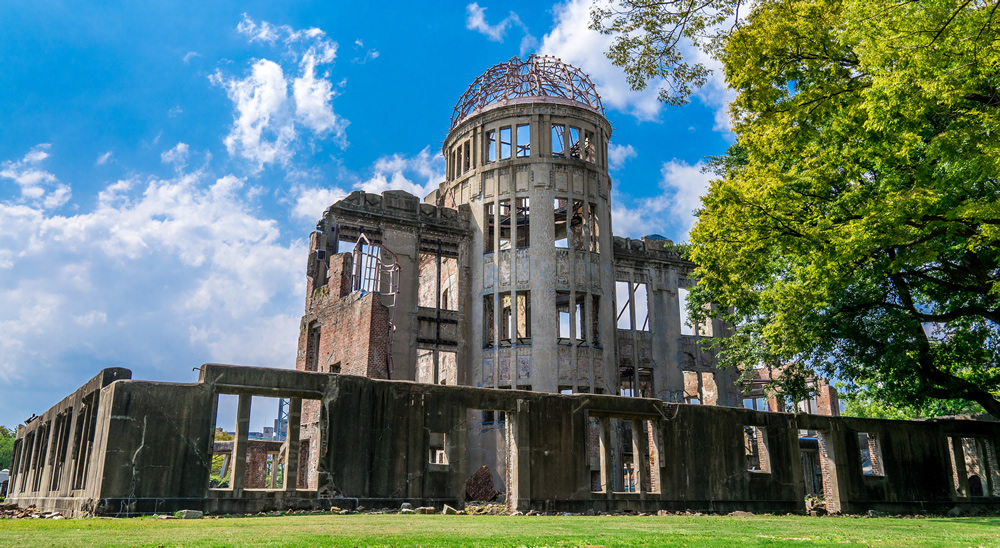
The building, located extremely close to the hypocenter, was instantly assaulted by heat rays and blast winds. All people inside the building died instantly, with the iron framework of the dome portion’s roof exposed and most of the exterior walls collapsed. However, because the blast struck the building almost vertically from above, the walls and iron framework skeleton at the center miraculously avoided collapse, leaving behind the characteristic dome-shaped structure.
The building was severely damaged and completely burned, with its interior entirely destroyed, but its remains were preserved in their original state as evidence directly demonstrating the destructive power of the atomic bomb, remaining to this day.
Preservation of the Atomic Bomb Dome and the Path to World Heritage Registration
Preservation versus Demolition: Public Debate
In the postwar period, as Hiroshima City’s reconstruction progressed, various opinions were exchanged among citizens regarding the treatment of the Atomic Bomb Dome. While some voices called for demolition, arguing that the building reminded people of the tragic memories of the bombing, the opinion that it should be preserved as an important structure conveying the devastation of the atomic bomb to future generations grew stronger.
In 1953 (Showa 28), Hiroshima Prefecture began formally using the term “Atomic Bomb Dome,” a name that had naturally become used among citizens based on the building’s distinctive appearance after the bombing.
Hiroko Karashiyama’s Diary and the Strengthening of Preservation Efforts
In 1966 (Showa 41), a diary left by Hiroko Karashiyama, who was a high school student at the time of the bombing and died of leukemia, became a major turning point in preservation efforts. In her diary, she wrote: “Will that pitiful Industrial Promotion Hall continue to appeal the terrible atomic bomb to future generations forever?”
Following this diary, a nationwide preservation movement was launched, and in July 1966 (Showa 41), the Hiroshima City Assembly passed a resolution to preserve the Atomic Bomb Dome. Subsequently, with funds collected from across the nation, the first preservation work was carried out in 1967 (Showa 42).
Efforts toward World Heritage Registration
In 1992 (Heisei 4), Hiroshima City decided to pursue UNESCO World Heritage registration for the Atomic Bomb Dome. However, there were various challenges on the path to registration. In particular, the registration of heritage sites related to World War II was expected to face international disagreements.
The Japanese government recommended the Atomic Bomb Dome to UNESCO in 1995 (Heisei 7) as “Hiroshima Peace Memorial.” The following year, at the 20th World Heritage Committee held in Mérida, Mexico in December 1996 (Heisei 8), the Atomic Bomb Dome was formally registered on UNESCO’s World Heritage List as “a peace memorial common to all humanity, directly conveying the devastation of the nuclear weapon used for the first time in human history, continuing to appeal across generations for the abolition of nuclear weapons and the importance of lasting world peace.”
At the time of registration, the United States and China abstained, but the dome was approved by unanimous agreement of the other committee member nations. This made the Atomic Bomb Dome a representative example of a “negative world heritage site,” a unique structure in the world that conveys the devastation caused by nuclear weapons in its original form, testifying to the crime committed by humanity.
Value and Significance as a World Heritage Site
Registration Criteria and Outstanding Universal Value
The Atomic Bomb Dome was registered as fulfilling criterion (vi) of the World Heritage registration criteria: “Being directly or tangibly associated with events, living traditions, ideas, beliefs, or artistic and literary works of outstanding universal significance.”
Specifically, the following points were evaluated:
- Uniqueness: Being the only structure in the world directly demonstrating the destructive power of nuclear weapons
- Symbol of Peace: Possessing a universal message continuously appealing for the abolition of nuclear weapons and world peace
- Historical Testimony: Directly conveying the devastation of the atomic bomb, used for the first time in human history
- State of Preservation: Maintaining the appearance from the time of the bombing to the greatest extent possible
Role as a Negative World Heritage Site
The Atomic Bomb Dome is classified, along with the Auschwitz Concentration Camp (Poland) and Gorée Island (Senegal), as a “negative world heritage site.” This refers to heritage preserved to remember the tragic events humanity has committed and to serve as lessons to prevent repeating the same mistakes.
The Agency for Cultural Affairs positions the Atomic Bomb Dome as “a memorial appealing to the world about the tragedy of war and the value of peace,” and it is also used as an important material for peace education in museums and art galleries nationwide.
Architectural Features and Preservation Status of the Atomic Bomb Dome
Details of Architectural Structure
The architectural features of the Atomic Bomb Dome are as follows:
- Structure: Reinforced brick with steel frame, partly reinforced concrete construction
- Scale: Three stories above ground, basement one story, tower portion equivalent to five stories
- Height: Approximately 25 meters (to dome top)
- Dome portion: Elliptical, major axis approximately 11 meters, minor axis approximately 8 meters
- Total floor area: Approximately 1,023 square meters (before bombing)
Due to the bombing, the copper-sheeted roof of the dome section was completely lost, leaving only the iron framework skeleton. Most of the exterior walls collapsed, but because the blast struck the building almost vertically, the walls and iron framework structure at the center escaped collapse.
History of Preservation Work
The Atomic Bomb Dome has undergone multiple preservation works:
- First Preservation Work (1967 / Showa 42): Reinforcement of deteriorating walls and rust prevention treatment of iron frame sections
- Second Preservation Work (1989-1990 / Showa 64 – Heisei 1): Reinforcement of exterior walls and strengthening of foundation portions
- Third Preservation Work (2002-2003 / Heisei 14-15): Iron frame reinforcement of dome section and preservation treatment of exterior walls
- Fourth Preservation Work (2015-2016 / Heisei 27-28): Comprehensive preservation treatment in commemoration of the building’s 100th anniversary
In these works, preservation has been carried out with minimal intervention, based on the policy of preserving the building as it appeared at the time of the bombing as much as possible. Materials and methods used are carefully selected with emphasis on harmony with the original.
Restricted Access and Protective Measures
The area around the Atomic Bomb Dome is enclosed by fences, and entry into the interior of the building and contact with it by visitors are strictly restricted. This is a measure for preservation of the building and safety assurance. Viewing is only possible from the outer perimeter, allowing observation of the building from various angles.
Practical Guide to Visiting the Atomic Bomb Dome
Access
Public Transportation
- Streetcar: Exit at “Atomic Bomb Dome” stop on the Hiroshima Electric Railway, within walking distance
- Approximately 15 minutes from Hiroshima Station, fare 220 yen
- Lines 2 and 6 are convenient
- Bus: Exit at “Peace Memorial Park” bus stop, approximately 5 minutes’ walk
- JR: Approximately 25 minutes’ walk from Hiroshima Station, approximately 10 minutes by taxi
Automobile
- Approximately 20 minutes from “Hiroshima IC” on the Sanyo Expressway
- No dedicated parking lot; use paid parking facilities nearby
- Peace Memorial Park underground parking (paid) is closest
Viewing Information
- Viewing Hours: Exterior viewing possible 24 hours (illumination after sunset)
- Admission: Free (exterior viewing only)
- Recommended Duration: Approximately 15-30 minutes for exterior viewing only
- Recommended Times: Early morning or evening offers fewer crowds and suitable conditions for photography
Viewing Tips
- Observe from Multiple Angles: By viewing the building from various positions—north side, south side, riverside, etc.—you can gain more detailed understanding of the traces of the bombing
- Check Information Boards: Information boards placed around the area contain detailed descriptions of the building’s history and the circumstances of the bombing
- Changes in Appearance by Time of Day: The building’s appearance changes significantly depending on the time of day—morning light, midday, dusk, and nighttime illumination
- View from Motoyasu River: The vista along the riverside walking path is ideal for capturing the full image of the Atomic Bomb Dome
Peace Memorial Park and Surrounding Facilities
Hiroshima Peace Memorial Museum
Located approximately 5 minutes’ walk from the Atomic Bomb Dome, the Hiroshima Peace Memorial Museum (Atomic Bomb Museum) is an important museum conveying the reality of the atomic bomb.
- Opening Hours: 8:30–18:00 (extended during certain periods)
- Closed: December 30-31
- Admission: Adults 200 yen, High school students 100 yen, Middle school students and below free
- Recommended Duration: Approximately 1-2 hours
Exhibits are diverse, including the condition of Hiroshima before and after the bombing, belongings of bombing victims, and photographs and materials conveying the reality of the bombing. It also collaborates with museums and art galleries nationwide, serving as a hub for peace education.
Major Facilities in Peace Memorial Park
Cenotaph for the A-Bomb Victims (Hiroshima Peace City Memorial Monument)
- Design: Kenzo Tange
- Inscription: “Rest in peace. This wrongdoing shall not be repeated.”
- Central venue for the August 6 Peace Memorial Ceremony
The Children’s Peace Monument
- Dedicated to Sadako Sasaki, who was exposed to radiation at age two and died of leukemia ten years later
- Paper cranes donated from across the nation are offered here
National Hiroshima Peace Memorial Hall for the Atomic Bomb Victims
- Opening Hours: 8:30–18:00 (extended during certain periods)
- Admission: Free
- Visitor accounts and testimony videos of bombing victims can be viewed
Peace Bell
- A bell with a world map depicted, which visitors can ring freely
- Visitors can experience ringing the bell in prayer for peace
Recommended Viewing Route
Standard Course (Approximately 3-4 hours)
- Atomic Bomb Dome viewing (30 minutes)
- Head south along Motoyasu River
- Paying respects at the Cenotaph for the A-Bomb Victims (15 minutes)
- Visit to Hiroshima Peace Memorial Museum (1.5–2 hours)
- The Children’s Peace Monument viewing (15 minutes)
- Visit to National Hiroshima Peace Memorial Hall for the Atomic Bomb Victims (30 minutes)
- Peace Bell (10 minutes)
This route provides comprehensive learning about the devastation of the atomic bomb and wishes for peace.
Tourist Spots around the Atomic Bomb Dome
Orizuru Tower
A multipurpose commercial complex that opened in 2016 immediately east of the Atomic Bomb Dome.
- Observation Deck “Hiroshima no Oka”: Panoramic views of the Atomic Bomb Dome and Hiroshima cityscape from approximately 50 meters above ground
- Business Hours: 10:00–18:00 (observation deck)
- Admission: Adults 1,700 yen, High and middle school students 900 yen, Elementary school students 700 yen
- Orizuru Plaza: The “Paper Crane Wall” where folded paper cranes can be deposited is popular
Hiroshima Castle
A historic structure located approximately 1 kilometer northeast of the Atomic Bomb Dome.
- Alternate Name: Rijo Castle
- Main Keep: Exterior restored in 1958 (Showa 33)
- Opening Hours: 9:00–18:00 (times vary)
- Admission: Adults 370 yen, High school students, seniors 180 yen, Middle school students and below free
The history of the main keep that collapsed due to the atomic bomb is also displayed, and visiting it along with the Atomic Bomb Dome allows for a deeper understanding of Hiroshima City’s history.
Shukkeien Garden
A Japanese garden located east of Hiroshima Castle, created as a private estate of Hiroshima feudal lord Asano.
- Opening Hours: 9:00–18:00 (times vary)
- Admission: Adults 260 yen, High school, university students 150 yen, Elementary and middle school students 100 yen
- Characteristics: Though severely damaged by the atomic bomb, it was restored after the war and offers beautiful scenery throughout the four seasons
Dining around the Atomic Bomb Dome
Hiroshima-style Okonomiyaki (Savory Pancakes)
Mitcchán Sohombaten Hatchohori Main Store
- Approximately 10 minutes’ walk from the Atomic Bomb Dome
- An originator of Hiroshima-style okonomiyaki
- Business Hours: 11:00–21:00
- Price Range: 800–1,200 yen
Reicchán Hiroshima Station Front Branch
- Popular with local residents
- Known for fluffy texture
- Business Hours: 11:00–22:00
- Price Range: 900–1,500 yen
Hiroshima Oyster Cuisine
Kaki-bune Kanawa
- A floating restaurant on the Motoyasu River
- Enjoy oyster dishes while viewing the Atomic Bomb Dome
- Business Hours: 11:00–21:30
- Price Range: Lunch 1,500 yen–, Dinner 3,000 yen–
Cafes and Rest Stops
ORIZURU TOWER Cafe
- First floor of Orizuru Tower
- Rest while viewing the Atomic Bomb Dome
- Drinks using Hiroshima lemons are popular
Peace Memorial Park Rest House
- Rest facility within the park
- Light food and beverages provided
- Free rest space available
Notes and Etiquette for Visiting the Atomic Bomb Dome
Clothing and Belongings
- Clothing: Comfortable walking shoes recommended due to the large area of Peace Memorial Park
- Summer: Strong sunlight, so bring hats, umbrellas, and drinking water
- Winter: Windy and cold along the river, so dress warmly
- Rain: A raincoat in addition to an umbrella is helpful
Viewing Etiquette
- Be Quiet: Remember this is a place of remembrance; avoid loud conversation
- Photography: Memorial photographs are permitted, but frivolous poses or disrespectful acts are strictly forbidden
- Trash: Always take it with you or place in designated bins
- Smoking: No smoking in Peace Memorial Park except in designated areas
- Floral Offerings: Flowers can be offered at the cenotaph (you may bring flowers to place there)
Opportunities to Hear Survivor Testimony
Testimony sessions by atomic bomb survivors are regularly held at the Hiroshima Peace Memorial Museum and Peace Memorial Park. Check the official website in advance for schedules, and if possible, attending provides deeper understanding.
The Atomic Bomb Dome and Peace Education
Hub for School Excursions and Peace Studies
The Atomic Bomb Dome and Peace Memorial Park are important hubs for peace education where school groups from across the nation visit on educational trips. The Ministry of Education, Culture, Sports, Science and Technology also promotes peace education, and many schools include visits to Hiroshima in their educational programs.
Learning Programs
- Survivor Experience Talks: Rare opportunities to hear experiences directly from bombing survivors
- Peace Volunteers: Volunteer guides who conduct tours within Peace Memorial Park (reservation required)
- Peace Learning Workshops: Various programs implemented at the museum
Online Learning Resources
The Hiroshima Peace Memorial Museum’s official website provides digital archives and video testimony from survivors, which can be utilized for pre-visit preparation or post-visit reflection.
The August 6 Peace Memorial Ceremony
Every August 6, the “Hiroshima Atomic Bomb Victims Commemoration and Peace Memorial Ceremony” (Peace Memorial Ceremony) is held before the Cenotaph for the A-Bomb Victims.
Overview of the Ceremony
- Time: Begins at 8:00 AM
- Moment of Silence: 8:15 AM (time of atomic bomb detonation)
- Participation: Open to the general public (no advance registration required, first-come, first-served)
- Peace Declaration: The Mayor of Hiroshima reads a peace declaration
- Children’s Peace Declaration: Representatives of Hiroshima elementary and middle school students make a declaration
On this day, people from around the world visit Hiroshima to offer prayers for peace. Accommodations fill up early, so advance reservations are necessary if planning to visit during this period.
The Future of the Atomic Bomb Dome: Challenges in Preservation and Succession
Addressing Aging and Deterioration
Nearly 80 years have passed since the bombing, and aging deterioration of the building is an unavoidable challenge. Hiroshima City and the Agency for Cultural Affairs conduct periodic surveys and preservation work, but questions regarding how much of the original materials to retain and how to reinforce the structure remain ongoing subjects of discussion.
Aging of Survivors and Succession of Memory
The average age of survivors exceeds 85 years, and the number of people able to speak from direct experience continues to decrease annually. Recording testimony on video and succession to younger generations have become urgent matters, with Hiroshima City implementing training programs for “atomic bomb experience successors.”
Utilization of Digital Technology
In recent years, new exhibition methods utilizing VR (virtual reality) and AR (augmented reality) technologies have been introduced. Digital reconstruction of Hiroshima’s prewar cityscape and building interiors promotes deeper understanding.
International Role as a World Heritage Site
Appeal for Nuclear Weapons Abolition
The Atomic Bomb Dome functions as an international symbol appealing for the abolition of nuclear weapons. As the secretariat of the “Mayors for Peace,” Hiroshima City cooperates with over 8,000 cities worldwide, working toward a world without nuclear weapons.
International Conferences and Visits by Dignitaries
In May 2016, Barack Obama became the first sitting U.S. president to visit the Atomic Bomb Dome and Peace Memorial Park, attracting worldwide attention. Additionally, the G7 Hiroshima Summit was held in May 2023, with leaders of each nation visiting the Peace Memorial Museum, serving as a venue for conveying international messages of peace.
Cooperation with UNESCO
Continuous cooperation with UNESCO continues after World Heritage registration, including periodic reports on preservation conditions and advice from international experts. Information exchange and joint projects with other negative world heritage sites are also implemented.
Conclusion: The Universal Message Conveyed by the Atomic Bomb Dome
The Atomic Bomb Dome, a world heritage site in Hiroshima Prefecture, is not merely a bombed structure but a universal peace memorial conveying lessons that humanity must never repeat the same mistakes. The history from its construction in 1915 through its exposure to the bomb, preservation efforts, to its World Heritage registration in 1996 represents the fruition of many people’s desires for peace.
Visiting the Atomic Bomb Dome is a valuable opportunity to understand the terror of nuclear weapons and realize the importance of peace. Hiroshima City, as a peace memorial city, continues to convey messages of peace through various facilities including museums, museums, and memorials.
As visitors from across the nation and around the world visit this place to contemplate peace and convey its importance in their respective regions, this represents the most important significance of the Atomic Bomb Dome as a world heritage site. Transcending time, this building continues to appeal as humanity’s common heritage for wishes of lasting peace.