
Complete Guide to the Gassho-zukuri Villages of Shirakawa-go and Gokayama | Thorough Explanation of Gifu Prefecture’s World Heritage Site
The gassho-zukuri villages of Shirakawa-go and Gokayama are Japanese cultural heritage representing the country, registered as a UNESCO World Cultural Heritage site in December 1995. The site consists of three villages: the Ogimachi settlement in Shirakawa Village, Ono District, Gifu Prefecture, and the Ainokura and Suganuma settlements in Nanao City, Toyama Prefecture, preserving the appearance of traditional Japanese mountain villages as they exist today.
This article provides detailed explanations of the world heritage site “Gassho-zukuri Villages of Shirakawa-go and Gokayama,” covering its historical background, unique architectural style, cultural value, and tourism information.
What Are the Gassho-zukuri Villages of Shirakawa-go and Gokayama?
Overview of World Heritage Registration
The “Gassho-zukuri Villages of Shirakawa-go and Gokayama” were registered as a UNESCO World Cultural Heritage site on December 9, 1995. The official registration name is “Historic Villages of Shirakawa-go and Gokayama.”
Three villages are registered as world heritage sites:
- Ogimachi Settlement (Shirakawa Village, Ono District, Gifu Prefecture): The largest gassho-zukuri village with approximately 600 residents currently living there
- Ainokura Settlement (Nanao City, Toyama Prefecture): A quiet mountain village with 20 existing gassho-zukuri houses
- Suganuma Settlement (Nanao City, Toyama Prefecture): The smallest settlement with 9 preserved gassho-zukuri houses
These three settlements contain over 100 gassho-zukuri houses in total, many of which are currently used as residences, guest houses, and restaurants.
Reasons for and Value of World Heritage Registration
The main reasons these gassho-zukuri villages were registered as world heritage sites are as follows:
- Unique Architectural Technique: The gassho-zukuri style, built without using a single nail, represents the pinnacle of traditional Japanese wooden construction technology
- Harmony with Environment: Architectural style and settlement formation adapted to harsh natural conditions in heavy snowfall areas
- Continuity of Living Culture: Not only the buildings but also the spirit of “yui” (mutual aid) and traditional living practices continue to be passed down
- Preservation of Landscape: Beautiful cultural landscape maintained in unity with surrounding natural environment
The World Heritage Committee evaluated these settlements as “masterpieces of human creative talent” (evaluation criterion iv) and “outstanding examples of traditional settlements” (evaluation criterion v).
History and Background of Gassho-zukuri Architecture
Origins of Gassho-zukuri
The exact origin of gassho-zukuri is unclear, but the oldest existing gassho-zukuri house is believed to be about 300 years old. However, this architectural style itself is thought to have existed in even older times.
The Shirakawa-go and Gokayama regions are located in the steep mountains of the Hida Highlands, where winter snowfall exceeds 3 meters, making it a heavy-snow area. In such harsh natural conditions, people developed a unique architectural style.
Historical Development
Edo Period
During the Edo period, Shirakawa-go was territory of the Kaga domain, and Gokayama was also known as an “exile location” for the Kaga domain. During this time, sericulture flourished, and the large attic spaces of gassho-zukuri houses began to be used for raising silkworms.
Saltpeter (gunpowder material) production was also an important industry, carried out secretly under the protection of the Kaga domain. This specialized industry became the economic foundation of the settlement and enabled maintenance of the gassho-zukuri houses.
Meiji and Taisho Periods
After the Meiji Restoration, sericulture continued to develop, and some gassho-zukuri attics were expanded to three or four stories. This period is considered the heyday of the gassho-zukuri villages.
Showa Period
Following the Showa period’s changes in lifestyle and modernization, gassho-zukuri houses rapidly decreased. Particularly after the 1960s, many gassho-zukuri houses were demolished and replaced with modern buildings.
In 1967, the Ogimachi settlement in Shirakawa Village established a residents’ charter with three principles of “don’t sell, don’t rent, don’t demolish,” marking the beginning of settlement preservation efforts. This paved the way for later world heritage registration.
From Heisei Era to Present
In 1976, Ogimachi settlement in Shirakawa-go was designated as a National Important Traditional Building Preservation District, and in 1994, both Ainokura and Suganuma settlements received similar designations. Then in 1995, world heritage registration was realized.
Currently, local residents, government, and NPO organizations cooperate to preserve and inherit the gassho-zukuri villages.
Gassho-zukuri Architectural Technology and Characteristics
Origin of the Name “Gassho”
The term “gassho-zukuri” is named after the structural materials supporting the roof, which resemble “gassho” (hands joined in prayer). The steeply pitched thatched roof is the most distinctive characteristic, with roof angles reaching approximately 60 degrees.
Architectural Structure Characteristics
Steeply Pitched Roof
The most prominent feature of gassho-zukuri is a thatched roof with a pitch of 45 to 60 degrees. This steep pitch serves several purposes:
- Reduction of Snow Removal Labor: The steep pitch allows snow to slide off naturally, reducing the labor required for snow removal
- Distribution of Snow Load: Snow accumulated on the roof is efficiently transferred to the pillars
- Water Drainage: Heavy rain during the rainy season and typhoons can be quickly drained
- Creation of Large Attic Space: A spacious attic area is created, usable for sericulture and other purposes
Structure Without Nails
Gassho-zukuri is built without using a single nail, with wood pieces bound together using rope or plant fibers called “neso.” This construction method offers the following advantages:
- Flexibility: During earthquakes or strong winds, the entire building sways flexibly and absorbs impact
- Ease of Disassembly and Relocation: If necessary, the building can be disassembled and relocated to another site
- Ease of Repair: Partial repairs and replacement of components are relatively easy
Thatched Roof
The roof material consists of thatch made from miscanthus grass and reeds. Thatched roofs require re-thatching every 30-40 years, but possess the following excellent characteristics:
- Insulation: Thatch 50-60 centimeters thick serves as an excellent insulator, providing cool summers and warm winters
- Breathability: Air passes through the thatch, preventing moisture accumulation
- Natural Material: Environmentally friendly and decomposes naturally when disposed of
Interior Structure
Traditionally, the interiors of gassho-zukuri were arranged with the first floor as living space and the second floor and above as work areas or sericulture facilities.
- First Floor: Living space centered around an open-hearth fireplace. Characterized by construction with thick pillars and beams and an open floor plan
- Second to Fourth Floors: Attic space. Used for silkworm breeding racks and storage of farm tools
- Open-hearth Fireplace: Served functions of heating, cooking, and lighting, and was the central element of the house. Smoke from the hearth cured the thatch, providing insect control and preservative effects
Materials Used in Construction
Construction of gassho-zukuri employs natural materials available locally:
- Wood: Mainly cedar, chestnut, and keyaki (Japanese elm) from local sources
- Thatch: Miscanthus grass, reeds, wheat straw, etc.
- Rope: Straw rope and plant fiber rope
- Earth Wall: Mixture of earth, straw, and lime
All these materials are naturally decomposable, making this a sustainable architecture that considers the environment.
Attractions in Ogimachi Settlement of Shirakawa-go
Overview of the Settlement
Ogimachi settlement in Shirakawa-go is the largest gassho-zukuri village, with 114 existing gassho-zukuri houses. Approximately 600 people currently live in the settlement, making it known as a “living world heritage site.”
Major Tourist Attractions
Ogimachi Castle Ruins Observation Platform
The most popular observation point offering views of the entire settlement. Particularly during winter illumination events or in seasons of fresh greenery and autumn foliage, spectacular views spread out. Access to the platform takes about 20 minutes on foot or about 10 minutes by shuttle bus.
Wada House
A gassho-zukuri house designated as a National Important Cultural Property with approximately 300 years of history. The interior is open to the public, allowing detailed viewing of the living style and architectural techniques of the time.
Kanda House
Also designated as a National Important Cultural Property, built approximately 170 years ago. It has a history of being used as a physician’s house, with medical instruments of that era also displayed.
Myosenji Temple Local Museum
A rare temple with a gassho-zukuri main hall and storehouse. Open as a local museum, visitors can learn about the history and culture of Shirakawa-go.
Outdoor Museum Gassho-zukuri Minkaen
An outdoor museum with over 25 gassho-zukuri houses relocated and preserved. Visitors can enter and view the houses, with old farm implements and household items on display.
Seasonal Attractions
Spring (March to May)
New greenery sprouts as snow melts, and rice planting preparations begin. Cherry blossoms can be enjoyed from late April through May.
Summer (June to August)
Lush green scenery spreads, and the landscape with water-filled rice paddies is beautiful. Traditional events such as summer festivals and doburoku (cloudy sake) festivals are held.
Autumn (September to November)
Autumn leaves color the settlement, and the golden ears of ripening rice create a harvest season. Mid-October through early November marks the peak autumn foliage season.
Winter (December to February)
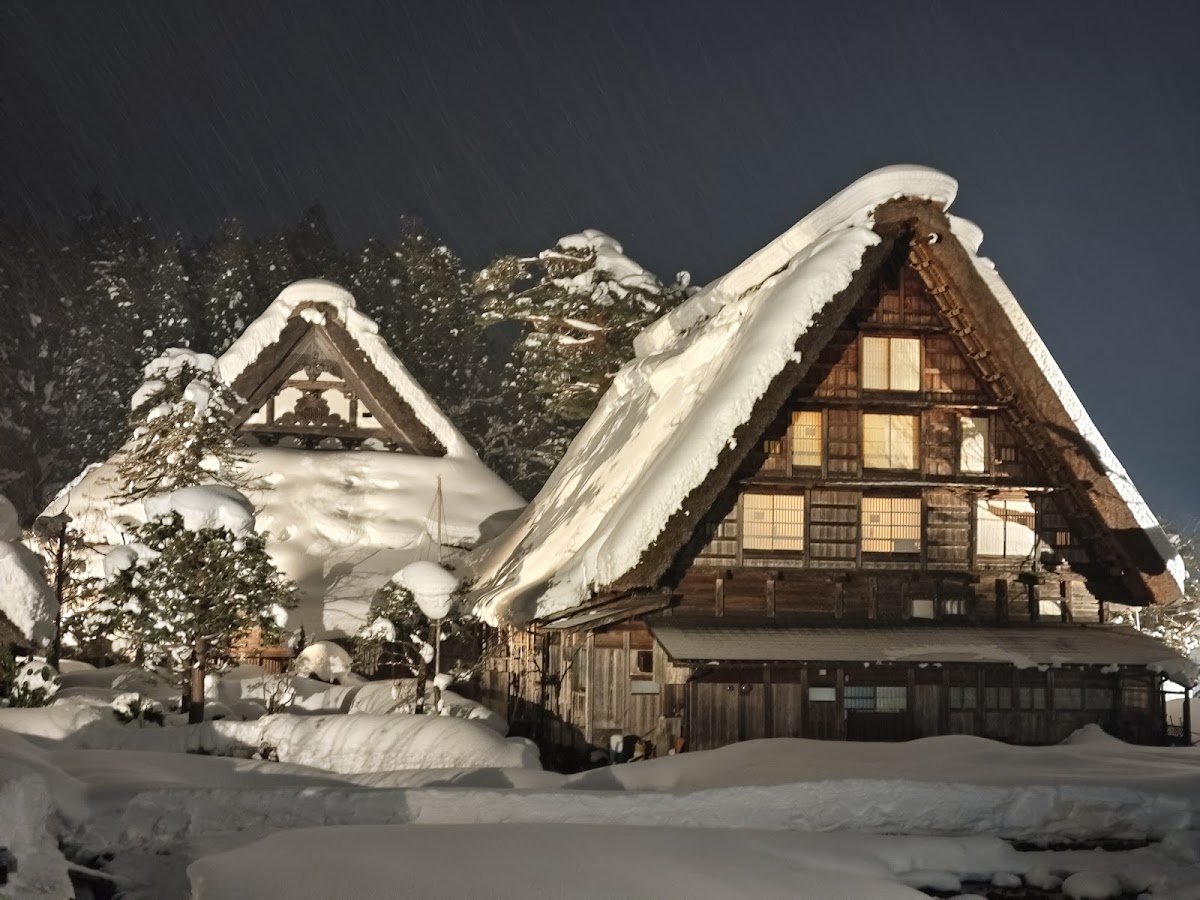
Snow-covered gassho-zukuri villages create a fantastic landscape like a fairy tale world. Night illumination events are held in January and February, attracting many visitors from Japan and abroad.
Ainokura and Suganuma Settlements in Gokayama
Characteristics of Ainokura Settlement
Ainokura settlement in Nanao City, Toyama Prefecture, is a gassho-zukuri village with 20 existing gassho-zukuri houses. Compared to Ogimachi settlement in Shirakawa-go, it receives fewer tourists, offering a quieter and more serene atmosphere.
Main Attractions
- Ainokura Folklore Museum: A museum introducing the living culture and history of Gokayama
- Ainokura Observation Platform: A viewpoint overlooking the entire settlement
- Gassho-zukuri Accommodation Experience: Guest houses offer opportunities to stay in actual gassho-zukuri buildings
Ainokura settlement is characterized by beautiful scenery harmonizing paddy fields and gassho-zukuri houses, popular with photography enthusiasts.
Characteristics of Suganuma Settlement
Suganuma settlement is the smallest of the three, with 9 existing gassho-zukuri houses. Though a compact settlement, it offers a unified and beautiful landscape.
Main Attractions
- Gokayama Folklore Museum: Exhibits living tools and folklore materials of Gokayama
- Saltpeter Museum: Introduces the manufacturing method of saltpeter, the gunpowder material of the Kaga domain
- Observation Plaza: A viewpoint overlooking the settlement
Suganuma settlement, located along National Route 156, is notable for its excellent accessibility.
Culture and Traditions of Gokayama
Beyond gassho-zukuri, unique cultures remain in the Gokayama region:
Kokiriko Bushi
Considered one of Japan’s oldest folk songs, “Kokiriko Bushi” is traditional entertainment passed down in the Gokayama region. It is characterized by a unique rhythm and the sound of an instrument called “sasara.”
Mugiya Bushi
A representative folk song of Gokayama, characterized by beautiful, melancholic melody. It continues to be sung in local festivals and events.
Washi Paper Making
Gokayama washi has a history exceeding 800 years and is a traditional craft. Sturdy and beautiful washi made from kozo (mulberry) is still handmade by craftspeople today.
Preservation Activities in Gassho-zukuri Settlements
Preservation Challenges
The gassho-zukuri villages of Shirakawa-go and Gokayama, though world heritage sites, face numerous preservation challenges:
Maintenance of Thatched Roofs
Thatched roofs require complete re-thatching every 30-40 years, costing tens of millions of yen per house. Additionally, the aging and lack of successors among thatching craftspeople is a serious problem.
Population Decline and Aging
The outflow of young people to urban areas has resulted in population decline and aging in settlements. When people stop living in buildings, maintenance becomes difficult.
Impacts of Increased Tourism
Following world heritage registration, tourist numbers have surged dramatically, with approximately 1.7 million visitors annually to Ogimachi settlement. This creates challenges for residents’ living environment and settlement landscape preservation.
Preservation Efforts
The “Yui” Spirit of Mutual Aid
In gassho-zukuri settlements, a traditional system called “yui” (mutual aid) has long functioned. The tradition of residents cooperating to undertake large-scale work such as thatched roof re-thatching continues today.
Preservation Funds and Subsidy Systems
In addition to cultural heritage protection subsidies from national and local governments, Shirakawa-go has established its own preservation fund supporting maintenance and repair costs for gassho-zukuri houses.
Technology Inheritance Efforts
Regular training programs for thatching craftspeople and lectures on traditional building techniques are conducted to promote technology inheritance.
Tourism Management
To protect residents’ living environment, measures include awareness campaigns for tourist behavior and access restrictions to certain areas. Shirakawa-go has implemented a fully reserved parking system to optimize tourist numbers.
Promotion of Young Resident Settlement
Systems allowing young people to establish livelihoods in the area through guest house management using gassho-zukuri buildings or production and sales of traditional crafts are being developed.
Tourism Information and Access Methods
Access to Ogimachi Settlement in Shirakawa-go
Public Transportation
- From Takayama: Nohi Bus, approximately 50 minutes (2,600 yen one way)
- From Kanazawa: Nohi Bus or Hokuriku Railway Bus, approximately 1 hour 15 minutes (2,000 yen one way)
- From Nagoya: Gifu Bus express bus, approximately 2 hours 50 minutes (4,000 yen one way)
- From Toyama: Nohi Bus, approximately 1 hour 30 minutes (1,730 yen one way)
Automobile
- From Tokyo Area: Chuo Expressway → Nagano Expressway → Tokai-Hokuriku Expressway, approximately 5 minutes from Shirakawa-go IC
- From Osaka/Nagoya Area: Tokai-Hokuriku Expressway, approximately 5 minutes from Shirakawa-go IC
- From Kanazawa Area: Tokai-Hokuriku Expressway, approximately 5 minutes from Shirakawa-go IC
Parking
Shirakawa-go’s main parking is Seseragi Park (capacity 200 vehicles). During busy periods, it operates on a complete reservation system requiring advance booking. Parking fee is 1,000 yen for regular vehicles.
Access to Gokayama
Ainokura Settlement
- From Takaoka Station: Kaetsu Noto Bus, approximately 1 hour, get off at Ainokura-guchi bus stop, walk approximately 3 minutes
- From Shirakawa-go: Approximately 30 minutes by car
Suganuma Settlement
- From Takaoka Station: Kaetsu Noto Bus, approximately 1 hour 10 minutes, get off at Suganuma bus stop
- From Shirakawa-go: Approximately 20 minutes by car
Parking
Both Ainokura and Suganuma settlements have free parking. However, Suganuma settlement requires a settlement preservation cooperation fee of 500 yen (regular vehicles).
Best Tourist Seasons
Winter Illumination (January and February)
Shirakawa-go hosts night illumination events on weekends in January and February each year. The sight of gassho-zukuri villages illuminated against snowy landscapes is fantastical and the most popular season. However, it operates on a complete reservation system with access limited to lodging guests and pre-booked bus tour participants.
Spring Greenery (April to May)
After snowmelt, the fresh green season offers relatively fewer tourists, allowing leisurely sightseeing. Rice planting landscapes are also visible.
Autumn Foliage (October to November)
Gassho-zukuri settlements colored by autumn leaves are extremely beautiful and ideal for photography. Particularly mid-October through early November marks the peak foliage season.
Accommodations
Gassho-zukuri Guest Houses
Guest houses allowing stays in actual gassho-zukuri buildings exist in each settlement of Shirakawa-go and Gokayama. Visitors can taste local cuisine around an open-hearth fireplace and experience traditional living. Rates are approximately 10,000-15,000 yen per night including two meals.
Nearby Hot Spring Inns
Areas surrounding Shirakawa-go include hot springs such as Hirase Hot Spring and Shirakawa-go Hot Spring, offering hot spring inn accommodations.
Tourist Conduct Guidelines
- Respect for Residents’ Privacy: Gassho-zukuri settlements are simultaneously tourist destinations and places where people actually live. Do not trespass on residents’ properties or fields without permission.
- Photography Etiquette: Do not photograph residents’ windows and entrances without permission. Drone usage is prohibited.
- Trash Disposal: Few trash cans exist in settlements. Always take trash with you.
- Smoking: To prevent fire, smoking is prohibited except in designated areas.
- Winter Equipment: When visiting in winter, cold-resistant clothing and non-slip shoes are essential. Snowfall can exceed one meter.
- Reservations: Especially during busy periods, advance reservations are often required for parking, accommodations, and illumination events.
Nearby Tourist Attractions
Takayama City
Located approximately 50 minutes by car from Shirakawa-go, Takayama City is known as the “Little Kyoto of Hida.” Historic neighborhoods are preserved, and many tourists visit both Takayama and Shirakawa-go.
Main Attractions
- Old Town District (Sanmachi Street)
- Takayama Jinya
- Morning Markets (Miyagawa Morning Market, Jinya-mae Morning Market)
- Hida Folk Village and Hida no Sato
Kanazawa City
Located approximately 1 hour by car from Shirakawa-go, Kanazawa City benefits from improved access to Tokyo with the opening of the Hokuriku Shinkansen. Numerous attractions include Kenrokuen Garden, Kanazawa Castle, and Higashi Chaya District.
Hida Furukawa
Located approximately 40 minutes by car from Shirakawa-go, Hida Furukawa is known as the setting for the movie “Your Name.” The historic townscape and scenery along Seto River are beautiful.
Miboro Dam
Located approximately 20 minutes by car from Shirakawa-go, this is one of Japan’s major rock-fill dams. The reservoir lake, Lake Miboro, displays beautiful scenery throughout the seasons.
Food Culture of Shirakawa-go and Gokayama
Local Cuisine
Hoba Miso (Magnolia Leaf Miso)
A local dish where miso, vegetables, and mushrooms are placed on a magnolia leaf and grilled. The magnolia leaf fragrance transfers to the miso, creating a unique flavor.
Hida Beef
Gifu Prefecture’s renowned brand beef, available in areas surrounding Shirakawa-go. Served as steaks, grilled meat, and sukiyaki in various preparations.
Soba
Soba cultivation is thriving in the Shirakawa-go and Gokayama regions, with many restaurants offering handmade soba. Particularly exceptional during new soba season (October to November).
Mountain Vegetable Dishes
Spring offers abundant wild vegetables including butterbur shoots, ostrich ferns, and aralia shoots.
River Fish
Salt-grilled char and sweetfish are traditional flavors.
Local Specialties and Souvenirs
Doburoku (Cloudy Sake)
Shirakawa-go is so famous for doburoku that an annual doburoku festival is held. The cloudy sake is characterized by distinctive sweetness and acidity.
Red Turnip Pickles
Traditional pickles from the Hida region with bright red color and moderate acidity.
Sarubōbo (Monkey Doll)
Traditional dolls of the Hida region meaning “baby monkey.” Popular as talismans for safe childbirth and household peace.
Gokayama Washi Paper Products
Traditional Gokayama washi is used for bookmarks, stationery, lamp shades, and other items for sale.
Future of Gassho-zukuri Settlements
Efforts Toward Sustainable Tourism
The gassho-zukuri villages of Shirakawa-go and Gokayama are advancing sustainable tourism efforts to balance tourism with preservation.
Overtourism Countermeasures
Shirakawa-go implements the following measures to mitigate negative effects from visitor concentration:
- Implementation of fully reserved parking system
- Illumination events on complete reservation and capacity-limited basis
- Strengthened tourist awareness activities
- Promotion of distributed tourism (directing visitors to surrounding areas like Gokayama)
Harmony with Regional Economy
Systems are being developed to return tourism income to settlement preservation activities and resident livelihood improvement. Guest house management and souvenir sales allowing residents to directly benefit from tourism are also being established.
Application of Digital Technology
Virtual Tours
Following the COVID-19 pandemic, online settlement tour guides and VR experiences are now offered. This allows people unable to visit in person to experience the charm of gassho-zukuri settlements.
Strengthened Information Dissemination
Real-time congestion information and seasonal highlights are shared through official websites and SNS to distribute visitor flow.
Inheritance to Next Generation
The following efforts are underway to pass gassho-zukuri settlements to future generations:
Educational Programs
Educational programs teaching local elementary and junior high students about gassho-zukuri history, architectural technology, and regional culture are implemented. Children are expected to take pride in local cultural heritage and become future caretakers.
Migration Promotion
Programs accepting migrants from urban areas and utilizing vacant gassho-zukuri buildings are beginning. Support systems help migrants integrate into community and participate in preservation activities.
International Cooperation
Leveraging world heritage status, exchanges with similar cultural heritage sites and sharing of preservation techniques with other countries are being conducted.
Conclusion
The gassho-zukuri villages of Shirakawa-go and Gokayama are precious cultural heritage preserving the appearance of traditional Japanese mountain villages. The unique construction technology using no nails, steeply pitched thatched roofs adapted to heavy-snow regions, and mutual-aid culture supported by the “yui” spirit are highly appreciated worldwide.
Since world heritage registration in 1995, numerous domestic and international visitors have come, contributing to regional economic revitalization while also creating challenges from increased tourism. However, local residents, government, and NPO organizations cooperate to advance various initiatives pursuing sustainable preservation and tourism coexistence.
When visiting gassho-zukuri settlements, remember these are not mere tourist destinations but “living world heritage” where people actually reside. Enjoy this precious cultural heritage while respecting residents’ privacy and living environment.
The gassho-zukuri settlements, displaying different appearances in each season, offer new discoveries with every visit. Please actually visit and experience the beautiful scenery where Japanese traditional culture and nature harmoniously blend. Moreover, let us each consider what we can do to ensure this precious cultural heritage is passed on to future generations.