
Sado Island Gold Mine (Niigata Prefecture) World Heritage Site Complete Guide | History, Highlights, and Access Information
On July 27, 2024, the “Sado Island Gold Mine” located in Sado City, Niigata Prefecture, was officially registered as Japan’s 26th UNESCO World Cultural Heritage Site. At the 46th World Heritage Committee meeting held in New Delhi, India, this gold mine was recognized for its invaluable cultural heritage value as an unprecedented precious cultural asset in Asia, and it is a historical heritage that transmits the essence of Japan’s mining technology spanning over 400 years.
This article comprehensively provides information from the historical background of the Sado Island Gold Mine to its constituent assets, tourist highlights, and access methods, allowing for a deep understanding of its value as a World Heritage Site.
The UNESCO World Heritage “Sado Island Gold Mine”
The “Sado Island Gold Mine” is a World Cultural Heritage Site consisting of multiple mining archaeological sites located in Sado City, Niigata Prefecture. Its official name is “Sado Island Gold Mine,” and it comprises two major mining systems: the Nishimikawa Alluvial Gold Mine and the Aikawa Tsurushi Gold and Silver Mine.
Background of World Heritage Registration
The path to World Heritage registration for the Sado Island Gold Mine was long, requiring 27 years from when citizens’ groups began their registration campaign in 1997 (Heisei 9) until its completion. On February 1, 2022, the government’s cabinet meeting formally decided to recommend it to UNESCO, and on July 27, 2024, its registration as a World Cultural Heritage Site was realized.
This registration is the fruit of a quarter-century of efforts by numerous related parties, including relevant government agencies, Niigata Prefecture, domestic and international experts, the World Heritage Registration Promotion Diet Members’ Association, and the Registration Promotion Prefectural Citizens’ Conference.
Value as a World Heritage Site
The primary reason the Sado Island Gold Mine was recognized as a World Heritage Site is that from the 16th to 19th centuries, during an era when mechanization progressed in other regions of the world, it continued advanced traditional handicraft-based mining and ore-refining techniques for over 250 years.
In the 17th century, it was known as the world’s largest gold production site. As mechanization advanced in mines worldwide due to Western expansion, it was evaluated as an unparalleled example in Asia for its archaeological remains showing unique gold production systems that evolved according to the characteristics of each mine.
History of the Sado Island Gold Mine
Gold Production from the Heian Period
The history of gold on Sado Island is ancient, tracing back to the Heian period. Gold dust (alluvial gold) has long been collected, and the island was known as a gold-producing region in Japan. The sand gold extraction technology and culture of this era became the foundation for subsequent large-scale gold and silver mine development.
16th Century: Beginning of Full-Scale Development
Large-scale development of Sado’s gold and silver mines began in the mid-16th century. Particularly in the Nishimikawa Sand Gold Mine, techniques for collecting sand gold in rivers and along coasts developed, and many miners (mine operators) were active.
In 1542, the Tsurushi Silver Mine was discovered, and silver mining began. Through miners from this Tsurushi Silver Mine, the Aikawa Gold and Silver Mine was discovered in 1601.
Edo Period: Becoming Japan’s Largest Gold and Silver Mine
When the Aikawa Gold and Silver Mine was discovered in 1601, the Edo Shogunate immediately recognized its importance. The Aikawa Gold and Silver Mine was managed as a directly-controlled territory (tenryō) of the shogunate, and full-scale development began.
The Aikawa area, which had only a handful of houses when the mine was discovered, developed rapidly through gold and silver mining development. At its peak, approximately 50,000 people gathered in the town, and throughout the Edo period, it was Japan’s largest gold and silver mine and boasted one of the world’s highest production outputs.
As an important income source supporting the shogunate’s finances, the Sado gold and silver mine continuously supported the Edo Shogunate’s economic foundation. During the Edo period, a Sado Bugyo (administrator) office was established, and mining and ore refining were conducted under strict management systems.
Meiji Period and Beyond: Modernization and Continued Operations
After the Meiji Restoration, the Sado gold and silver mine was placed under government control and then sold to the private sector. From the Meiji to Showa periods, operations continued while incorporating Western technology, and the mine recorded a long history of approximately 400 years of mining until 1989 (Heisei 1).
Constituent Cultural Assets and Main Attractions
The World Heritage “Sado Island Gold Mine” consists of multiple constituent assets. Here we introduce the main components and tourist attractions in detail.
Nishimikawa Sand Gold Mine
The Nishimikawa Sand Gold Mine is an archaeological site of sand gold extraction located in the southwestern part of Sado Island. It maintains a tradition of sand gold extraction continuing from the Heian period, and traditional handicraft techniques such as “yuri-ita” (shaking boards for panning gold) developed for washing out sand gold from rivers and coasts.
The characteristics of the sand gold mine lie in its production system that skillfully utilized natural topography and water flow, such as open-pit mining and water-based selection techniques. Currently, facilities where visitors can experience sand gold panning are available, allowing people to experience the technology of that era.
Aikawa Tsurushi Gold and Silver Mine
The Aikawa Tsurushi Gold and Silver Mine represents the core of the Sado Island mining archaeological sites. It is a collective term for the Aikawa Gold and Silver Mine and the Tsurushi Silver Mine, and was the major mine supporting large-scale gold and silver production in the Edo period.
Aikawa Gold and Silver Mine
The Aikawa Gold and Silver Mine, discovered in 1601, functioned as Japan’s largest gold and silver mine throughout the Edo period. The total length of its tunnels reaches hundreds of kilometers, with the deepest shafts extending below sea level.
Doyu no Warito (The Cleft of Doyu)
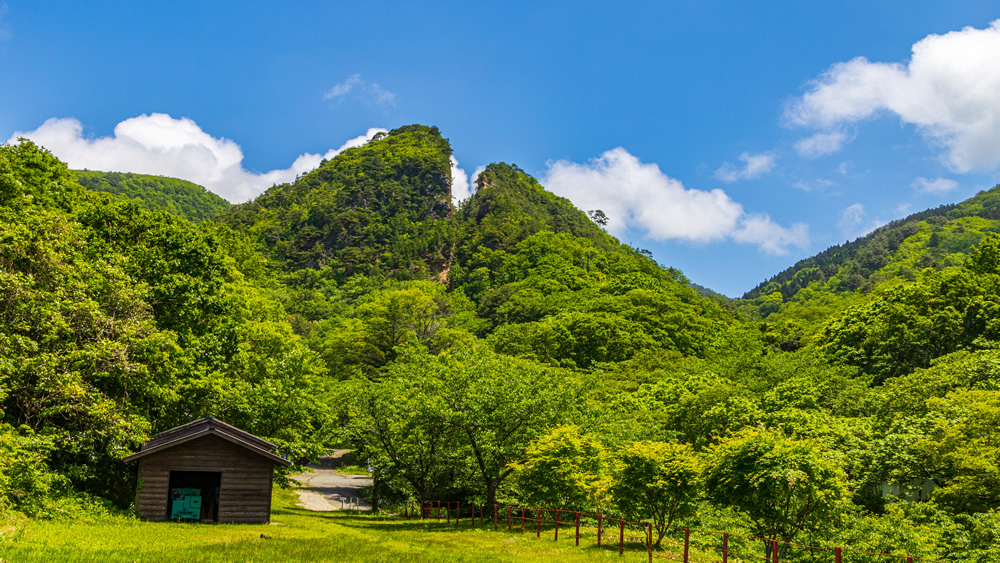
The “Doyu no Warito,” known as a symbol of the Aikawa Gold and Silver Mine, is an open-pit mining site featuring a unique landscape where the mountain appears split in two. This enormous V-shaped cleft was created as a result of miners digging down to reach gold ore veins by hand, testifying to the high level of mining technology and the massive scale of operations during the Edo period.
Measuring approximately 70 meters in height and 30 meters in width, this enormous excavation site displays an awe-inspiring landscape demonstrating how large-scale mining by traditional handicraft methods was during that era.
Tsurushi Silver Mine
The Tsurushi Silver Mine, discovered in 1542, was an important silver mine that operated before the discovery of the Aikawa Gold and Silver Mine. The mining techniques and experience developed here became the foundation for subsequent Aikawa Gold and Silver Mine development.
Historic Site Sado Gold Mine (Tourist Facility)
Currently, the tourist facility “Historic Site Sado Gold Mine” manages and preserves the Aikawa Gold and Silver Mine, the primary mining site of the World Heritage “Sado Island Gold Mine,” and opens part of it to the public for tourism.
Sotayuu Shaft (Sotayuu Tunnel)
A tunnel excavated in the early Edo period, with the mining conditions of that time reproduced using sophisticated figurines. Walking through the dimly lit tunnel, visitors can experience the harsh working environment of miners who used nothing but chisels and hammers to dig through hard rock.
Doyu Shaft
A modern tunnel excavated after the Meiji period, where visitors can observe mining methods after the introduction of Western technology. Remains such as tramway rails and mechanical equipment allow visitors to learn about technological changes over time.
Sado Gold and Silver Mine Guidance Facility “Kirariumu Sado”
“Kirariumu Sado,” which reopened with renovations in 2024, is a guidance facility where visitors can comprehensively learn about the history and technology of the Sado Gold and Silver Mine. Using the latest exhibition technology, it explains the value of the World Heritage Site in an easy-to-understand manner.
Within the facility, exhibitions are extensive, covering detailed information about Edo-period mining and ore-refining techniques, the culture and daily life of the era, and comparative perspectives with mines worldwide, allowing visitors to understand the Sado Gold and Silver Mine from multiple angles.
Sado Bugyo (Administrator) Office Ruins
This is the ruins of the Sado Bugyo office, which was established by the Edo Shogunate to manage the Sado Gold and Silver Mine. Parts of the site have been reconstructed, providing insights into the administrative structure and gold and silver management systems of that era.
In the Bugyo office, inspections of mined gold and silver, ore refining, and management of transportation to Edo were carried out, playing an important role in supporting the shogunate’s finances. The reconstructed buildings reproduce the working scenes of officials of that time and the methods used for weighing and measuring gold and silver.
Technical Characteristics of the Sado Island Gold Mine
Mining Techniques Using Traditional Handicrafts
The most distinguishing characteristic of the Sado Island Gold Mine is that it continued advanced traditional handicraft-based mining techniques from the 16th to 19th centuries.
From “Tanuki-bori” to “Tate-Zutsutsu”
In early mining, the “tanuki-bori” method, which involved digging horizontal tunnels following ore veins, was used. Subsequently, with technological advancement, the “tate-zutsutsu” (vertical shaft) method was developed, allowing access to deeper ore veins.
Innovation in Drainage Technology
The greatest challenge in deep mining was dealing with spring water seepage. At the Sado Gold and Silver Mine, this challenge was overcome by constructing “mizu-age-rin” (water-lifting wheels), human-powered pumping devices, and complex drainage tunnel systems.
Advancement of Ore-Refining Techniques
The ore-refining techniques for extracting gold and silver from mined ore also underwent unique development specific to Sado.
Hai-fuki Method (Ash-Blowing Method)
The “hai-fuki” method, in which ore containing gold and silver was melted, mixed with lead, and then heated above ash to leave only gold and silver, was a major ore-refining technique of the Edo period. This technique made it possible to efficiently produce high-purity gold and silver.
Nanban-fuki (Southern Barbarian Blowing)
The “nanban-fuki,” an ore-refining technique that came from the West in the 16th century and was adapted to Japanese conditions, was also employed, and by combining multiple techniques, production efficiency was increased.
Characteristics of the Production System
At the Sado Gold and Silver Mine, production systems optimized according to the characteristics of each mine were established.
Large-scale gold and silver production was realized under a complex organizational structure involving independent mining by miners, strict management by the shogunate, and the formation of specialized craftsman groups. This production system was highly developed not only as a technology but also as a social organization.
Tourism Information for Enjoying the Sado Island Gold Mine
Recommended Sightseeing Courses
Half-Day Course (approximately 4 hours)
- Kirariumu Sado (60 minutes): Understanding the overall picture of the World Heritage Site
- Historic Site Sado Gold Mine (90 minutes): Visiting the Sotayuu Shaft or Doyu Shaft
- Doyu no Warito Observation Deck (30 minutes): Appreciating the symbolic landscape
- Sado Bugyo Office Ruins (60 minutes): Learning about Edo-period management systems
Full-Day Course (approximately 7 hours)
In addition to the above, visitors can add sand gold panning experience at the Nishimikawa Sand Gold Mine and a stroll through the town of Aikawa for a deeper experience of Sado’s gold mine culture.
Visiting Hours and Admission Fees
Historic Site Sado Gold Mine
- Hours: 8:00 AM–5:30 PM (April–October), 8:30 AM–5:00 PM (November–March)
- Admission: Approximately 1,000 yen for adults (varies by course)
- Duration: 60–90 minutes per course
Kirariumu Sado
- Hours: 8:30 AM–5:00 PM
- Admission: Approximately 500 yen for adults
- Duration: Approximately 60 minutes
※ Prices and hours may change, so please check the official website for the latest information.
Best Season to Visit
The Sado Island Gold Mine is open for tourism year-round, but the most recommended periods are:
Spring (April–June)
The mild climate is ideal for sightseeing. The gold mine ruins set among fresh green foliage offer beautiful scenery.
Autumn (September–November)
During the autumn foliage season, the scenery around Doyu no Warito is particularly stunning. The comfortable temperatures are also suitable for walking and exploring.
Winter Precautions
As Sado Island has a Sea of Japan climate, there are days with snow and strong winds in winter. Since the tunnel temperatures remain constant year-round at around 10°C (50°F), warm clothing is necessary.
Traffic Guide and Access Information
How to Reach Sado Island
Since Sado Island is a remote island, visitors must first take a ferry or jet foil from Niigata Port or Naoetsu Port.
From Niigata Port
- Car Ferry: Approximately 2 hours 30 minutes
- Jet Foil: Approximately 1 hour
- Operator: Sado Kisen Company
- Arrival Port: Ryotsu Port
From Naoetsu Port
- Car Ferry: Approximately 1 hour 40 minutes
- Arrival Port: Ogi Port
Getting Around Sado Island
Rental Car (Recommended)
A rental car is the most convenient option for sightseeing on Sado Island. Rental car companies are available near Ryotsu Port and Sado Airport.
From Ryotsu Port to Historic Site Sado Gold Mine: Approximately 50 minutes by car (approximately 30 km)
Bus Routes
Niigata Kotsu Sado operates bus routes connecting various locations on the island, but as the number of buses is limited, it is recommended to check the schedule in advance.
Sightseeing Taxi
For those wanting to efficiently visit multiple spots, using a sightseeing taxi is also convenient. Some plans include drivers who explain the area’s history and culture.
Access to Main Facilities
Historic Site Sado Gold Mine
- Address: 1305 Shimoaikawa, Sado City, Niigata Prefecture
- From Ryotsu Port: Approximately 50 minutes by car
- Parking: Available (free)
Kirariumu Sado
- Address: Aikawa District, Sado City, Niigata Prefecture
- From Historic Site Sado Gold Mine: Approximately 5 minutes by car
Sado Bugyo Office Ruins
- Address: 1-1 Aikawa Hiromamachi, Sado City, Niigata Prefecture
- From Historic Site Sado Gold Mine: Approximately 10 minutes by car
The Sado Island Gold Mine and Japan’s World Heritage Sites
The “Sado Island Gold Mine” is Japan’s 26th World Heritage Site and the 20th World Cultural Heritage Site. Among Japan’s World Heritage sites, it holds an important position as an industrial heritage following “Meiji Japan’s Industrial Revolution Heritage Sites” and “Iwami Ginzan Silver Mine and Its Cultural Landscape.”
In particular, it is often compared with Iwami Ginzan (Shimane Prefecture), which is also an Edo-period mining archaeological site. However, the Sado Gold and Silver Mine has unique value in terms of gold production volume, the length of the mining period, and the continuation of traditional handicraft techniques.
Initiatives Following World Heritage Registration
Balancing Preservation and Utilization
Following World Heritage registration, Sado City and Niigata Prefecture are working to balance heritage preservation with tourism utilization. Efforts include ensuring tunnel safety, preserving archaeological remains, and implementing appropriate visitor management.
Enrichment of Educational Programs
Local elementary and middle schools have strengthened local studies education using the Sado Gold and Silver Mine as teaching material. Guide training programs have also been expanded, and interpretation tours conducted by knowledgeable guides are being offered.
International Promotion
Following the World Heritage registration, improvements in multilingual directional signage and interpretive materials are underway. Reception systems for foreign tourists have also been strengthened, and the site is expected to play a role as a venue for international cultural exchange.
Nearby Tourist Attractions
Sado Island has many attractive tourist destinations besides the gold mine sites.
Toki no Mori Park
A facility for the protection and breeding of the crested ibis, designated as Japan’s special natural monument. A valuable facility where visitors can observe the crested ibis up close.
Tarai-bune Boat Ride Experience
Visitors can experience riding in a “tarai-bune,” a traditional small boat of Sado. This experience is available around Ogi Port.
Sado Noh Theater
Sado is a region where noh theater flourishes, with over 30 noh stages located throughout the island. Regular performances are held.
Futatsugame and Ono-Game
Scenic spots on the north coast of Sado. Beautiful ocean views and interesting rock formations can be enjoyed.
Summary
The “Sado Island Gold Mine” in Sado City, Niigata Prefecture, registered as a UNESCO World Cultural Heritage Site in July 2024, is a Japanese gold and silver mining archaeological site group with a history spanning over 400 years. Comprising the Nishimikawa Sand Gold Mine and the Aikawa Tsurushi Gold and Silver Mine, it is a precious and unparalleled cultural asset in Asia, having continued advanced traditional handicraft-based mining and ore-refining techniques from the 16th to 19th centuries, during an era when the world was moving toward mechanization.
Visitors can experience the value of this World Heritage Site from diverse perspectives, including the magnificent archaeological remains like Doyu no Warito, tunnel viewing at Historic Site Sado Gold Mine, and learning experiences at Kirariumu Sado. The history of the gold and silver mine, where approximately 50,000 people gathered at its peak and supported the shogunate’s finances during the Edo period, occupies an important place in Japan’s economic history.
With the realization of World Heritage registration, the fruit of the region’s 27-year effort, the Sado Island Gold Mine has entered a new phase. Efforts to pass this precious cultural heritage on to future generations while maintaining a balance between preservation and utilization continue.
When visiting Sado Island, why not take time to thoroughly appreciate the World Heritage “Sado Island Gold Mine” and experience the depth of Japan’s mining technology history and culture? In Sado Island, where rich nature and history are in harmony, awaits an encounter with a World Heritage cultural asset of which Japan can be proud.