
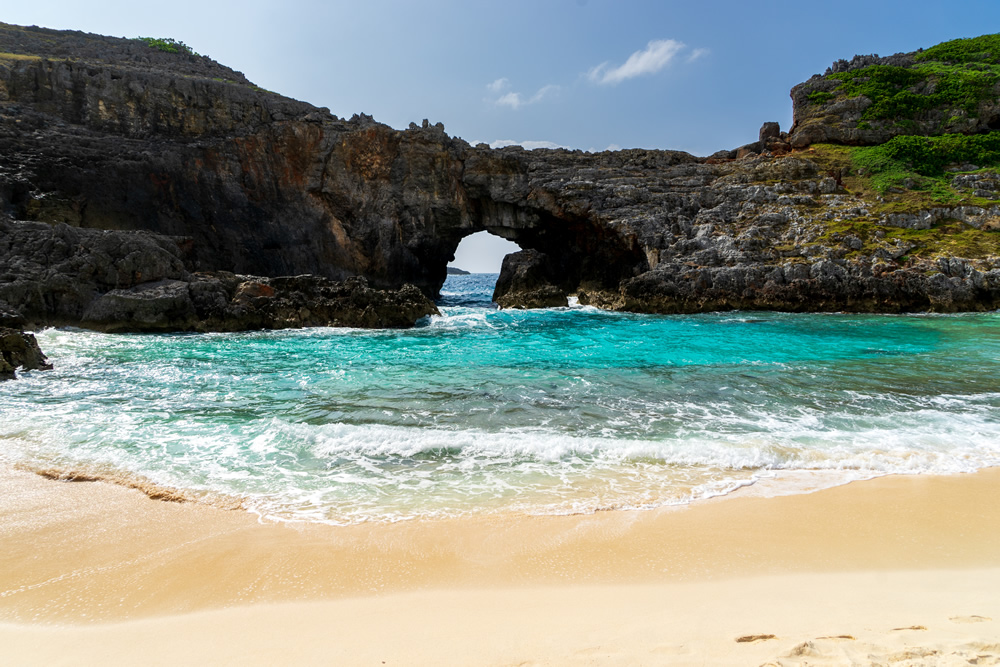
Ogasawara Islands, Tokyo: World Natural Heritage – Japan’s Unique Marine Island Ecosystem and the Path to Registration
About the World Natural Heritage Ogasawara Islands
The Ogasawara Islands consist of more than 30 islands in the Pacific Ocean, located approximately 1,000 kilometers south-southeast of the special wards of Tokyo, within the administrative jurisdiction of Ogasawara Village, Tokyo. On June 24, 2011, at the 35th session of the World Heritage Committee held in Paris, France, the islands were formally registered as Japan’s fourth World Natural Heritage Site.
The Ogasawara Islands have a total area of approximately 104 square kilometers and, while administratively belonging to Tokyo, they are remote islands requiring approximately 24 hours of sea travel from the capital. This geographic isolation has fostered a unique natural environment and the evolution of endemic species found nowhere else.
The Position of World Natural Heritage Sites in Japan
Japan’s World Natural Heritage Sites began with “Yakushima” and “Shirakami-Sanchi” registered in 1993, followed by “Shiretoko” in 2005. The Ogasawara Islands became the fourth registered site, with “Amami Oshima, Tokunoshima, Northern Okinawa Island and Iriomote Island” registered as the fifth in 2021.
Among these sites, the Ogasawara Islands are the only “marine islands,” having never been connected by land to any continent. This unique characteristic creates a value distinct from other World Natural Heritage Sites.
Overview and Geographic Characteristics of the Ogasawara Islands
The Island Groups Comprising the Archipelago
The Ogasawara Islands span approximately 400 kilometers from north to south and are primarily composed of three island groups:
Mukojima Island Group
- Including Mukojima, Nakashima, and Yomejima in the northern islands
- Many uninhabited islands preserving pristine nature
- Important breeding grounds for seabirds
Chichijima Island Group
- Including Chichijima, Aniijima, and Otoutojima
- Chichijima is the center of the Ogasawara Islands with approximately 2,000 residents
- Serves as a tourism hub
Hahajima Island Group
- Including Hahajima, Aneejima, and Imoutojima
- Approximately 450 residents live on Hahajima
- Retains more pristine natural environments
Additionally, the Volcanic Islands (Ioto, Kitaioto, and Minamiito) as well as Okinotori Island, Japan’s southernmost point, and Minamitori Island, its easternmost point, are included in Ogasawara Village’s administrative area but are not included in the World Heritage registration scope.
Only Chichijima and Hahajima have residential populations, with most other areas except Ioto, Okinotori Island, and three other islands designated as national parks.
Climate and Natural Environment
The Ogasawara Islands feature a subtropical oceanic climate with warm weather year-round. The average annual temperature is approximately 23 degrees Celsius, with winter minimum temperatures rarely dropping below 10 degrees.
Annual precipitation is approximately 1,300 millimeters, and the region is frequently affected by typhoons. Influenced by the Kuroshio Current, sea temperatures are high, supporting rich marine life including coral reefs, whales, and dolphins.
The Value of the Ogasawara Islands as a “World Natural Heritage Site”
Uniqueness as Marine Islands
The primary reason the Ogasawara Islands were highly valued as a World Natural Heritage Site is their characteristic as “marine islands.” Since their formation, the islands have never been connected by land to any continent, allowing limited biological species that arrived across the sea to undergo unique evolutionary processes.
This phenomenon is called “adaptive radiation,” observable in processes similar to those in the Galápagos and Hawaiian islands. The Ogasawara Islands hold worldwide significance as an “evolutionary laboratory” where such evolutionary processes can be observed in real-time.
A Treasure Trove of Endemic Species
The proportion of endemic species found only in the Ogasawara Islands is remarkably high, with the following figures recorded:
- Land mollusks: 94% endemic species
- Vascular plants: 36% endemic species
- Insects: 28% endemic species
Particularly, the endemism rate of land mollusks (land snails) is extremely high globally, with over 100 endemic species confirmed. Many of these are believed to have diversified through adaptive radiation from a single ancestral species.
In plants, numerous endemic species exist found nowhere but the Ogasawara Islands, including Munin Camellia, Ogasawara Mulberry, and Shimahorutonenoki. Endemic animal species such as the Ogasawara Flying Fox and the Red-crowned Pigeon also inhabit the islands.
UNESCO Evaluation Criteria
The World Heritage Committee registered the Ogasawara Islands based on the following evaluation criterion:
Criterion (ix): Outstanding examples representing significant ongoing ecological and biological processes in the evolution and development of terrestrial, freshwater, coastal, and marine ecosystems and biotic communities
The Ogasawara Islands were recognized as an excellent example demonstrating adaptive radiation and speciation processes in marine islands. Particularly, the diverse adaptive radiation of land mollusks represents a scale and rate of evolution rarely seen worldwide.
The Natural Charm of the Ogasawara Islands
Distinctive Vegetation
The vegetation of the Ogasawara Islands is characterized by subtropical evergreen broadleaf forest, but with limited continental plant influence, forming forests of endemic species that have undergone unique evolutionary processes.
Coastal areas display seashore plants such as Monkeypod and Beach Hibiscus, while inland areas feature forests dominated by endemic species like Shimahorutonenoki and Munin Camellia. Particularly, the Ishimon region on Hahajima retains pristine natural forests, serving as the core area of the World Heritage Site.
Marine Biodiversity
The waters surrounding the Ogasawara Islands are important habitats for whales and dolphins. Humpback whales visit during winter for breeding, while Sperm Whales are observed year-round. Additionally, multiple dolphin species including Pantropical Spotted Dolphins and Southern Bottlenose Dolphins inhabit the area.
Coral reefs are well-developed with abundant tropical fish species. The islands are also significant as sea turtle nesting grounds, with Green Sea Turtles laying eggs on beaches of both Chichijima and Hahajima.
A Paradise for Seabirds
The Ogasawara Islands are important breeding grounds for seabirds. The Mukojima Island Group, in particular, is an uninhabited island where many seabirds breed, including Brown Boobies, Streaked Shearwaters, and Sooty Shearwaters.
These seabirds play crucial roles in the Ogasawara Islands’ ecosystem, functioning as nutrient transporters from sea to land.
History of the Ogasawara Islands
History of Discovery and Settlement
While legend attributes the discovery of the Ogasawara Islands to Sadayori Ogasawara in 1593, this is not historically confirmed. The earliest confirmed record dates to 1670 when the Edo Shogunate surveyed the islands and called them “uninhabited islands.”
Beginning in 1830, Western settlers established themselves on Chichijima, and the islands developed into an international whaling base. In 1876, the Japanese government formally claimed sovereignty, leading to the start of large-scale Japanese settlement.
Post-war History and Reversion
Following World War II, the Ogasawara Islands came under American administration, and Japanese residents were forced to relocate. In 1968, the islands were returned to Japan, and the repatriation of former residents began.
This approximately 23-year period of uninhabited status, ironically, resulted in the preservation of the Ogasawara Islands’ natural environment, as human development was suppressed.
Tokyo’s Efforts and Conservation Activities
The Role of the Tokyo Metropolitan Ogasawara Branch Office
The Tokyo Metropolitan Ogasawara Branch Office undertakes various initiatives to preserve the value of the Ogasawara Islands as a World Natural Heritage Site.
Environmental conservation measures include invasive species management, protection of endemic species, and promotion of ecotourism. Particularly, the ecological impact of invasive species such as Green Anoles and feral goats is severe, with ongoing removal operations.
The Ministry of the Environment’s Conservation Projects
The Ministry of the Environment implements conservation projects for the Ogasawara Islands’ natural environment, including management of the Ogasawara National Park, protection and breeding of rare species, and invasive species control.
For endangered species such as the Red-crowned Pigeon and Ogasawara Flying Fox, habitat preservation and population monitoring are continuously conducted.
Ogasawara Village’s Initiatives
Ogasawara Village enacted the “Ogasawara Village World Natural Heritage Ordinance” to pass the value of the World Natural Heritage to future generations while seeking the balance between conservation and sustainable use.
By promoting ecotourism, the village aims to minimize environmental impact while activating the regional economy through tourism. Efforts include establishing a guide qualification system and setting restricted access areas to develop appropriate usage rules.
The Path to World Heritage Registration
The Recommendation and Review Process
Efforts toward World Natural Heritage registration of the Ogasawara Islands began in earnest in 2003. The Ministry of the Environment, the Forestry Agency, Tokyo, and Ogasawara Village coordinated to prepare recommendation documents and establish conservation frameworks.
In January 2010, the Japanese government formally recommended the islands to UNESCO, and in August 2010, IUCN (International Union for Conservation of Nature) conducted on-site surveys. IUCN recommended registration in May 2011, and formal registration was decided by the World Heritage Committee on June 24, 2011.
Challenges at the Time of Registration and Responses
During the review process, strengthened invasive species management and the establishment of tourism usage rules were identified as issues. To address these challenges, measures including enhanced Green Anole control and ecotourism promotion frameworks were implemented.
Access to and Tourism in the Ogasawara Islands
Means of Transportation
Access to the Ogasawara Islands is limited to the regular ferry “Ogasawara Maru,” which departs from Takeshiba Pier in Tokyo. The one-way trip requires approximately 24 hours, with the standard itinerary spanning six days (three nights on Chichijima, two nights aboard ship).
No scheduled air service operates, and this “difficulty of access” ironically contributes to the preservation of the natural environment. However, discussions about potential future air service continue while carefully considering environmental impacts.
Ecotourism in Practice
The Ogasawara Islands promote ecotourism designed to minimize environmental impact. Tours led by certified guides are recommended, and certain areas require guided-only access.
Various activities are offered to experience the islands’ rich nature, including whale watching, dolphin swimming, trekking, and diving.
Current Issues and Future Prospects
The Invasive Species Problem
The greatest challenge facing the Ogasawara Islands is the ecological impact of invasive species. Various invasive species threaten endemic species, including Green Anoles, feral goats, feral cats, and Albizia (a plant).
While the Ministry of the Environment, Tokyo, and Ogasawara Village jointly conduct invasive species removal operations, complete eradication requires long-term efforts.
Impacts of Climate Change
Concerns exist regarding potential effects on the Ogasawara Islands’ ecosystem from rising sea temperatures due to global warming and intensifying typhoons. Phenomena such as coral bleaching and impacts on seabird breeding have been observed, making long-term monitoring essential.
Realizing Sustainable Regional Communities
Maintaining the livelihood and regional economy of island residents while preserving the value of the World Natural Heritage is also an important challenge. Ecotourism promotion, sustainable fisheries, and renewable energy installation are being pursued for development harmonizing with the environment.
Conclusion
The Ogasawara Islands, while administratively part of Tokyo, are located approximately 1,000 kilometers away in the Pacific Ocean and represent a World Natural Heritage Site of which Japan can be proud. Since registration in 2011, their distinctive ecosystem as marine islands and their remarkably high endemism rate have been evaluated globally.
The Ogasawara Islands, also called the “Oriental Galápagos,” represent Japan’s fourth World Natural Heritage Site following Yakushima, Shirakami-Sanchi, and Shiretoko, serving as a precious “natural laboratory” where evolutionary processes can be observed in real-time.
Related organizations including the Ministry of the Environment, Tokyo, and Ogasawara Village work in coordination to implement various conservation activities such as invasive species management, endemic species protection, and ecotourism promotion. These efforts are expected to transmit the unique natural value of the Ogasawara Islands to future generations.
Visiting the Ogasawara Islands offers a precious opportunity to appreciate the wonders of Earth’s evolution and biodiversity. Including the “difficulty of access” requiring a 24-hour sea voyage, a visit to the Ogasawara Islands will be a uniquely special experience.
Inquiries
For detailed information regarding the World Natural Heritage of the Ogasawara Islands and inquiries about visiting, please contact the following relevant organizations.
Tokyo Metropolitan Ogasawara Branch Office
- General administration of the Ogasawara Islands and World Natural Heritage information provision
- Telephone inquiries available
Ministry of the Environment, Kanto Regional Environmental Office
- Management of Ogasawara National Park and natural conservation information
- Information on invasive species control and rare species protection projects
Ogasawara Village Office
- Tourism information and ecotourism information
- Provides latest information on the village’s official website
Ogasawara Village Tourism Bureau
- Accommodation, tour, and activity information
- Introduction of certified guides
Working in coordination with these relevant organizations, protecting the rich and distinctive nature of the Ogasawara Islands and promoting sustainable use represents both the responsibility as a World Natural Heritage Site and a commitment to the future.