Shirakami Mountains, Aomori Prefecture World Heritage Site Complete Guide | The Charm of Pristine Beech Forests and Visitor Information
The Shirakami Mountains is a collective term for a vast mountainous region spanning approximately 130,000 hectares across the southwestern part of Aomori Prefecture and the northwestern part of Akita Prefecture. In December 1993, it was registered as Japan’s first World Natural Heritage Site along with Yakushima in Kagoshima Prefecture, and is internationally recognized as a precious ecosystem preserving one of the largest primordial beech forests in East Asia.
This article provides comprehensive information necessary for those planning to visit, covering the value of the Shirakami Mountains as a World Heritage Site, area information on the Aomori Prefecture side, access methods, mountain entry rules, and the attractions of each season.
Shirakami Mountains | Overview of World Natural Heritage Site
Basic Information about the Shirakami Mountains
The Shirakami Mountains are a forested area spanning six municipalities: Ajigasawa, Fukaura, and Nishimeya villages in Aomori Prefecture, and Noshiro, Fujisato, and Yohozu towns in Akita Prefecture. Of the vast total area of approximately 130,000 hectares, the area registered as a World Heritage Site is 16,971 hectares in the core region.
This World Heritage Site area is a mountain range extending from an elevation of approximately 200 meters to the highest peak of Mukashiro-Shirakami at 1,250 meters, with the Aomori Prefecture side accounting for 12,627 hectares (approximately 74%) and the Akita Prefecture side 4,344 hectares (approximately 26%).
History of World Heritage Registration and Registration Criteria
The Shirakami Mountains were registered as a World Natural Heritage Site on December 11, 1993, at the UNESCO World Heritage Committee Meeting in Cartagena, Colombia. In Japan, it was registered simultaneously with Yakushima, becoming the country’s first World Natural Heritage Site.
The registration criteria were evaluated as “natural areas of outstanding universal value” for the following reasons:
- Primordial beech forests that have been scarcely affected by human activity are preserved over a wide area
- The largest-scale beech forest ecosystem in East Asia
- Diverse flora and fauna inhabit and grow in this precious ecosystem
- Academic value in demonstrating vegetation changes since the Ice Age
Shirakami Mountains’ Primordial Beech Forests | Value of the Ecosystem
Characteristics and Scale of Beech Forests
The most distinctive feature of the beech forests in the Shirakami Mountains is that they are maintained in a “primordial” state with little human influence. Beech is a deciduous broadleaf tree representative of Japan’s cool temperate zone, and the Shirakami Mountains contain many giant trees over 200 years old.
Approximately 90% of the World Heritage Site area is covered by deciduous broadleaf forests dominated by beech, and both their purity and scale are rare from a global perspective. Beech forests are also called the “green dam,” serving a water source conservation function by storing abundant precipitation and producing clean water.
Diverse Flora and Fauna Habitat
The Shirakami Mountains form a rich ecosystem based on beech forests.
Flora:
- Over 500 plant species have been confirmed
- Deciduous broadleaf trees including beech, Japanese oak, Japanese maple, and wingnut
- Forest floor vegetation including bamboo grass and fuki-sou
- Alpine wildflowers such as dogtooth violet and Japanese hepatica appearing with snowmelt in spring
Fauna:
- Large mammals such as Japanese black bears and Japanese serows
- Medium and small mammals including Japanese macaques and Japanese squirrels
- Rare bird species such as white-tailed eagles and Japanese woodpeckers
- Diverse groups of amphibians, reptiles, and insects
These organisms are complexly related and maintain a stable ecosystem.
Geology and Landforms of the Shirakami Mountains
The Shirakami Mountains are based on granite formed during the Cretaceous period of the Mesozoic Era approximately 100 million years ago, with Tertiary volcanic rocks layered on top. Complex mountain terrain has been formed through erosion over long periods.
The continuous succession of deep valleys and steep slopes made human development difficult, which, as a result, was a factor in preserving the primordial beech forests. Additionally, abundant precipitation (1,500–2,000mm annually) and moderate temperatures provide an optimal environment for beech growth.
Shirakami Mountains on the Aomori Prefecture Side | Areas and Attractions
World Heritage Area on the Aomori Prefecture Side
The World Heritage Site area on the Aomori Prefecture side comprises 12,627 hectares, accounting for approximately 74% of the total. The main areas are distributed across the following three municipalities:
Nishimeya Village:
- Located in the central part of the World Heritage Site area
- Gateway for access to major spots such as Anmon Falls and the Mother Tree
- Home to the Shirakami Mountains Visitor Center
Ajigasawa Town:
- Located in the northwestern part of the World Heritage Site area
- Approach from the Sea of Japan side
Fukaura Town:
- Located in the southwestern part of the World Heritage Site area
- Popular tourist spots including Juniko Lakes and Blue Pond (outside the World Heritage Site area)
Major Tourist Attractions on the Aomori Prefecture Side
Anmon Falls:
The representative scenic spot of the Shirakami Mountains, consisting of three waterfalls: the First Fall (42m drop), the Second Fall (37m), and the Third Fall (26m). The valley beauty surrounded by beech forests is magnificent, with many tourists visiting especially during new foliage and autumn foliage seasons.
Beech Forest Hiking Trail:
Multiple hiking courses starting from Nishimeya Village allow visitors to experience primordial beech forests up close. Walking along well-maintained wooden boardwalks, you can observe giant trees and diverse vegetation.
Mother Tree (400-year-old Beech):
A giant beech tree over 400 years old and a symbolic presence of the Shirakami Mountains. With a trunk circumference of 4.65 meters and a height of 30 meters, its majestic form tells the history of the primordial forest.
Juniko Lakes and Blue Pond (outside World Heritage Site area):
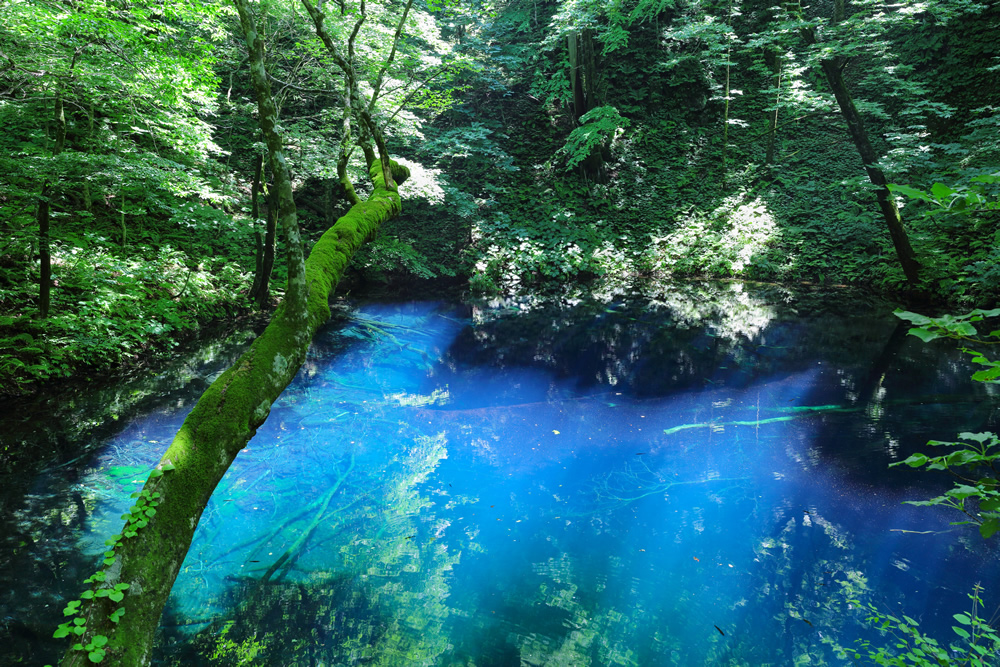
A group of 33 lakes and ponds in Fukaura Town, with Blue Pond being particularly popular for its mystical cobalt blue waters. Though outside the World Heritage Site area, it has become a standard tourist spot for Shirakami Mountains visitors.
Shirakami Mountains Visitor Center
The Shirakami Mountains Visitor Center in Nishimeya Village is a base facility where visitors can learn about the nature and culture of the Shirakami Mountains.
Main Exhibition Contents:
- Introduction to the four seasons and ecosystems of the Shirakami Mountains
- Explanation of how beech forests work and the flora and fauna
- History of World Heritage registration and conservation activities
- Impressive nature videos in the theater
Usage Information:
- Opening hours: 8:30–17:00 (April–October), 9:00–16:30 (November–March)
- Closed: Mondays (or next day if Monday is a holiday), year-end and New Year
- Admission: Free
- Mountain entry consultations and registration of climbing plans are also handled here
Access to Shirakami Mountains | How to Get There from Aomori Prefecture
Access by Public Transportation
By JR:
- From Hirosaki Station:
- Konan Bus “Tashiro/Shirakami Line” for approximately 1 hour
- Get off at Shirakami Mountains Visitor Center
- Operation from late April to early November (closed in winter)
- From Goshogawara Station:
- JR Gono Line to Ajigasawa Station (approximately 30 minutes)
- Taxi or rental car to Nishimeya Village area
Sightseeing Bus Tours:
Several travel companies operate day tours departing from Hirosaki and Aomori city centers. The advantage is efficient sightseeing with a guide.
Access by Private Vehicle
From Hirosaki area:
- Via National Route 7 → Prefectural Route 28 (Iwasaki Nishimeya Hirosaki Line)
- Approximately 50 minutes from Hirosaki city center to Shirakami Mountains Visitor Center
- Parking: Free parking available at the Visitor Center, Anmon Falls entrance, and other locations
From Aomori city area:
- Tohoku Expressway → Owarida Hirosaki IC → National Route 7 → Prefectural Route 28
- Travel time: Approximately 1 hour 30 minutes
From Akita area:
- Akita Expressway → Noshiro South IC → National Route 101 → Prefectural Route 28
- Travel time: Approximately 2 hours
Winter Traffic Restrictions:
Mountain routes such as Prefectural Route 28 (Tsugaru Pass) are typically closed to traffic from mid-November to late April. Be sure to check the latest road conditions beforehand.
Precautions for Access
- Mobile phone coverage: Many mountain areas have poor or no cell signal, so prepare maps and information in advance
- Gas stations: Few gas stations in mountain areas, so refuel in advance
- Weather changes: Mountain terrain means weather changes rapidly; bring rain gear and warm clothes
- Wildlife: This is a habitat for Japanese black bears, so carrying a bear bell is recommended
Mountain Entry to Shirakami Mountains | Rules and Permit System
World Heritage Site Area Divisions and Entry Restrictions
The Shirakami Mountains World Heritage Site area is divided into “core areas” and “buffer zones” according to the level of conservation.
Core Area:
- Area: 10,139 hectares
- The most pristine area
- Fundamentally prohibited entry, with permission required only for special purposes such as academic research
- On the Aomori Prefecture side, a permit application to the Tohoku Forest Management Bureau of the Japan Forest Service is necessary
Buffer Zone:
- Area: 6,832 hectares
- A protective belt around the core area
- Some routes allow entry by notification
- Tourist routes such as Anmon Falls are included in this zone
Methods for Mountain Entry Registration and Permit Applications
Entry Registration for Buffer Zone:
- Accepted at Shirakami Mountains Visitor Center or Aqua Green Village ANMON
- Submission by the day before entry is recommended
- Required information: Name, contact, entry date and time, route, number of people, etc.
Permit Application for Core Area:
- Application address: Tohoku Forest Management Bureau of Japan Forest Service
- Application deadline: Up to one month before planned entry
- Review period: Approximately 2 weeks
- Permission conditions: Purposes with public interest such as academic research or nature conservation activities
Rules to Follow During Mountain Entry
To protect the precious nature of the Shirakami Mountains, be sure to follow these rules:
- Prohibition of collecting flora and fauna: Collecting plants, insects, minerals, etc. is strictly forbidden
- Take all garbage with you: All trash must be taken home
- Adherence to designated routes: Avoid leaving marked trails
- Fire prohibition: Use of fire is essentially prohibited
- No pet accompanying: To protect ecosystems
- Maintaining quiet: To minimize impact on wildlife
Shirakami Mountains in Four Seasons | Best Times to Visit
Spring (April–June) | Season of Snowmelt and New Foliage
From late April to May, the Shirakami Mountains experience snowmelt. This is a beautiful time when increased snowmelt streams contrast with newly emerging beech leaves.
- Highlights: Budding beech leaves, spring wildflowers such as dogtooth violets
- Temperature: 5–15°C (varies by elevation)
- Precautions: Many routes still have snow; proper mountaineering equipment is necessary
Summer (July–August) | Deep Green Beech Forests
The season when lush beech forests are most vibrant. Forest interiors remain cool and the area is popular as a retreat from summer heat.
- Highlights: Deep green beech forests, diverse insects and birds
- Temperature: 15–25°C
- Precautions: Insect repellent and heat stroke prevention needed. Also the active season for Japanese black bears, requiring caution
Autumn (September–November) | Spectacular Fall Foliage
The season when the Shirakami Mountains attract the most visitors. Centered around the golden leaves of beeches, fall foliage in various colors colors the mountains.
- Highlights: Golden beech leaves, red foliage of Japanese rowan and maple
- Foliage peak: Mid-October to early November (timing varies by elevation)
- Temperature: 5–15°C
- Precautions: High season popularity requires early planning and advance reservations
Winter (December–March) | Silver-White World
The Shirakami Mountains covered in deep snow has many routes closed during winter. The winter Shirakami can be experienced through special programs such as snowshoe tours.
- Highlights: Snow-covered beech forests, frost flowers
- Temperature: -5–5°C
- Precautions: Road closures in winter, danger from heavy snow. Accompaniment by a professional guide is recommended
Nature Conservation and Management of Shirakami Mountains
Management Organizations and Conservation Efforts
The Shirakami Mountains World Heritage Site area is managed through cooperation among multiple administrative agencies:
Main Management Organizations:
- Tohoku Forest Management Bureau, Japan Forest Service: Management of national forests
- Tohoku Regional Environment Office, Ministry of the Environment: Nature conservation measures
- Aomori and Akita Prefectures: Management of prefectural forests, public awareness
- Agency for Cultural Affairs: Conservation of World Heritage value
Shirakami Mountains World Heritage Site Area Liaison Conference:
Consisting of Aomori and Akita Prefectures, related municipalities, the Japan Forest Service, the Ministry of the Environment, and others, this body formulates conservation management plans and facilitates coordination.
Conservation Challenges and Countermeasures
Main Issues:
- Overuse: Impact on vegetation from increased tourist numbers
- Invasive species introduction: Risk of invasive plant introduction through human movement
- Climate change: Potential impact on beech forest distribution from warming
- Etiquette violations: Littering, unauthorized route access
Conservation Efforts:
- Monitoring and tracking of visitor numbers
- Appropriate maintenance and repair of mountain trails
- Enhancement of environmental education programs
- Strengthening patrol activities
- Continuation of scientific surveys
JAPAN ECO TRACK and the Shirakami Mountains
In February 2025, the Ministry of the Environment released information about the Shirakami Mountains (Aomori Prefecture) area and routes on “JAPAN ECO TRACK,” an initiative to promote long-distance nature experience trails centered on Japan’s national parks to the world.
This platform introduces the Shirakami Mountains’ attractive trekking routes, access information, accommodations, and more in multiple languages, making it easier for domestic and international visitors to plan their trips.
Tourism and Accommodations Around Shirakami Mountains
Nearby Tourist Attractions
Nishimeya Village:
- Aqua Green Village ANMON: Comprehensive facility with hot springs, accommodations, and restaurant
- Michi-no-Eki “Tsugaru Shirakami”: Information hub selling local specialty products
- Shirakami Mountains Visitor Center: As described above
Hirosaki City:
- Hirosaki Castle: Existing castle keep and famous cherry blossom spot
- Tsugaru Clan Neputa Village: Experience facility for Tsugaru culture
- Hirosaki Apple Park: Facility unique to this apple-producing region
Fukaura Town:
- Juniko Lakes: Lake group featuring the Blue Pond
- Furofushi Hot Spring: Spectacular open-air bath facing the Sea of Japan
- Senjogiki: Scenic rocky coastline of the Sea of Japan
Accommodation Options
Around Shirakami Mountains:
- Aqua Green Village ANMON: The closest accommodation to Shirakami Mountains
- Shirakami Mountains accommodations: Guesthouses and inns within Nishimeya Village
- Campgrounds: Seasonal campground available within Aqua Green Village in summer
In Hirosaki City:
- Diverse options from business hotels to luxury inns
- Approximately 1 hour by car to the Shirakami Mountains
- Abundant restaurants and tourist attractions
In Fukaura Town:
- Hot spring inns along the Sea of Japan coast
- Convenient base for Juniko Lakes sightseeing
Local Cuisine and Specialty Products
Blessings from Shirakami Mountains:
- Shirakami Mountains spring water: Mineral-rich natural water
- Mountain vegetables: Butterbur sprouts, aralia shoots, bracken, etc.
- Mushrooms: Wild mushrooms cultivated in beech forests
Specialties of Tsugaru Region:
- Apples: Aomori apples and apple products
- Senbei soup: Regional dish made with southern Nanbu crackers
- Tsugaru soba: Local soba noodles made with regional buckwheat flour
- Tuna: Tuna from Oma and Fukaura
What to Bring and Wear When Visiting Shirakami Mountains
Basic Packing List
Essential items:
- Hiking boots or trekking shoes (with water resistance)
- Backpack (20–30L capacity)
- Rain gear (separate top and bottom recommended)
- Drinking water (1–2L)
- Snacks (rice balls, chocolate, nuts, etc.)
- Map and compass (smartphone map apps also useful)
- Headlamp or flashlight
- First aid kit (bandages, antiseptic, pain relief, etc.)
- Bear bell or bear deterrent spray
- Garbage bag (for waste)
Recommended items:
- Trekking poles
- Insect repellent spray (summer)
- Sunscreen
- Hat
- Gloves (depending on season)
- Towel, tissues
- Camera, binoculars
Season-Specific Clothing Advice
Spring and Autumn:
- Layered clothing (base layer, mid-layer, outer)
- Warm clothing such as fleece or down jacket
- Long-sleeve shirt, long pants
- Waterproof outer layer
Summer:
- Quick-drying shirt
- Long sleeves recommended (insect protection, sunburn prevention)
- Lightweight long pants
- Lightweight rain wear
Winter (when participating in snowshoe tours):
- High-insulation outer jacket
- Warm mid-layer (fleece, down, etc.)
- Waterproof pants
- Warm hat, gloves, neck warmer
- Snow boots
Frequently Asked Questions About Shirakami Mountains
Can anyone enter the Shirakami Mountains?
Entry regulations to the Shirakami Mountains vary by zone. The core area is fundamentally prohibited entry with a permit system. Conversely, certain routes in the buffer zone allow entry by notification. Major tourist spots such as Anmon Falls can be visited via marked trails.
Are there routes enjoyable for beginners?
Beginner-friendly routes include the Anmon Falls promenade trail (approximately 2 hours round trip) and beech forest hiking trails (1–2 hours round trip). These are relatively flat and well-maintained, allowing first-hand experience of the beech forest atmosphere. However, they are mountain trails and require appropriate equipment and preparation.
How much time is needed for Shirakami Mountains sightseeing?
For a day trip, at least 6–8 hours should be secured including travel from Hirosaki city center. Including learning at the Visitor Center (1 hour), round trip to Anmon Falls (2–3 hours), and lunch and breaks, the schedule becomes a full day. For more in-depth enjoyment, an itinerary of 1 night 2 days or more is recommended.
What should I do if I encounter a Japanese black bear?
The Shirakami Mountains are a habitat for Japanese black bears. To avoid encounters, ring a bear bell, speak loudly, and make noise while walking. If you do encounter one, calmly back away without panic, keep your eyes on it, and leave the area quietly. Running or shouting should be avoided. Carrying bear deterrent spray is also effective.
What is the best time for photography?
The autumn foliage season from mid-October to early November is most popular, but late May to early June with new green foliage is also beautifully photogenic. Additionally, mysterious images of beech forests as morning light filters through are popular with photography enthusiasts. Regardless of season, choosing days with stable weather is important.
Can families with children visit?
Visiting the Shirakami Mountains Visitor Center and walking short marked trails can be enjoyed by children in elementary school or older. However, understand that these are mountain trails, and plan realistically considering your child’s stamina and weather. Serious climbing routes require appropriate experience and fitness.
Conclusion | Shirakami Mountains, Aomori Prefecture World Heritage Site Attractions
The Shirakami Mountains hold invaluable natural heritage value as a World Natural Heritage Site preserving one of East Asia’s largest primordial beech forests. Approximately 74% of the World Heritage Site area is located on the Aomori Prefecture side, with attractions such as Anmon Falls and the Mother Tree scattered throughout.
When visiting, it is important to follow mountain entry rules and approach with proper preparation and equipment. Learn at the Shirakami Mountains Visitor Center beforehand and, having understood the importance of nature conservation, enjoy meeting this precious nature.
The Shirakami Mountains, which display different faces with each season, offer new discoveries with every visit. The primordial beech forests, the clear waters they nurture, the pure air—the unaltered nature teaches us much.
The Shirakami Mountains, a treasure of Japan recognized by the world. Please venture out on a journey to feel its charms with all your senses.